Why Pierre Omidyar decided to join forces with Glenn Greenwald for a new venture in news

Yesterday word leaked out that Glenn Greenwald would be leaving the Guardian to help create some new thing backed by Pierre Omidyar, the founder of eBay. I just got off the phone with Omidyar. So I can report more details about what the new thing is and how it came to be.

16 Oct 2013 11:48 am 95 Comments

Here’s the story he told me:

In the spring of this year, Pierre Omidyar was one of the people approached by the Washington Post Company about buying the Post. Jeff Bezos, the founder of Amazon, wound up with the prize. But as a result of exploring that transaction, Omidyar started thinking seriously about investing in a news property. He began to ask himself what could be done with the same investment if he decided to build something from the ground up.

As he was contemplating the Post purchase, he began to get more alarmed about the pressures coming down on journalists with the various leak investigations in Washington.

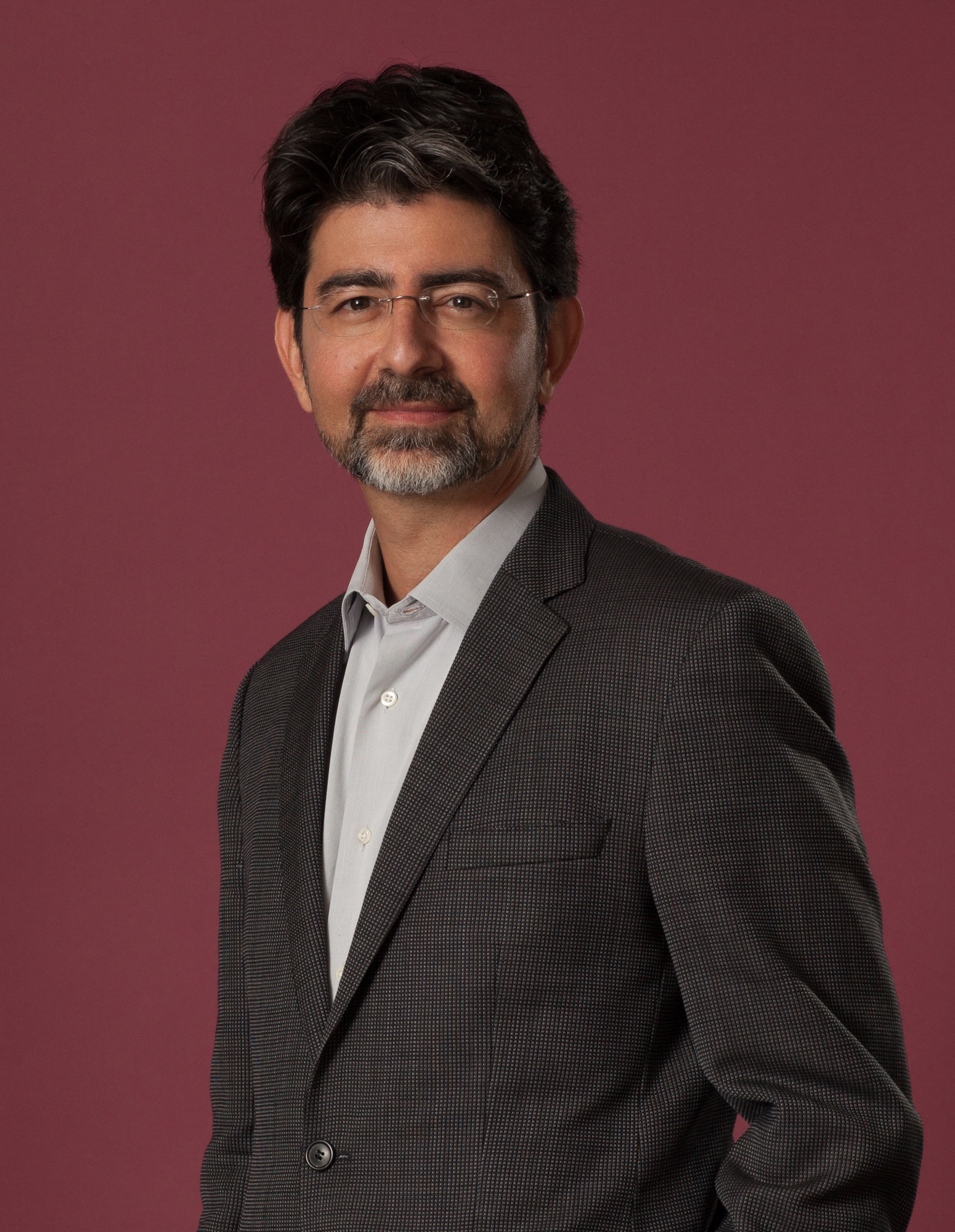
Pierre Omidyar

Pierre Omidyar

Then the surveillance stories started appearing and the full scope of the threat to independent journalism became clear. His interest in launching a new kind of news organization — capable of sustaining investigative work and having an effect with it — intensified throughout the summer as news from the Snowden files continued to pour forth.

Attempts to meet with Greenwald to discuss these plans and to find out more about how he operates were unsuccessful until this month. When they finally were able to talk, Omidyar learned that Greenwald, his collaborator Laura Poitras, and The Nation magazine’s Jeremy Scahill had been planning to form their own journalism venture. Their ideas and Omidyar’s ideas tracked so well with each other that on October 5 they decided to “join forces” (his term.) This is the news that leaked yesterday. But there is more.

Omidyar believes that if independent, ferocious, investigative journalism isn’t brought to the attention of general audiences it can never have the effect that actually creates a check on power. Therefore the new entity — they have a name but they’re not releasing it, so I will just call it NewCo — will have to serve the interest of all kinds of news consumers. It cannot be a niche product. It will have to cover sports, business, entertainment, technology: everything that users demand.

At the core of Newco will be a different plan for how to build a large news organization. It resembles what I called in an earlier post “the personal franchise model” in news. You start with individual journalists who have their own reputations, deep subject matter expertise, clear points of view, an independent and outsider spirit, a dedicated online following, and their own way of working. The idea is to attract these people to NewCo, or find young journalists capable of working in this way, and then support them well.

By “support” Omidyar means many things. The first and most important is really good editors. (Omidyar used the phrase “high standards of editing” several times during our talk.) Also included: strong back end technology. Powerful publishing tools. Research assistance. And of course a strong legal team because the kind of journalism NewCo intends to practice is the kind that is capable of challenging some of the most powerful people in the world. Omidyar said NewCo will look for “independent journalists with expertise, and a voice and a following.” He suggested that putting together a team of such people means understanding how each of them does his or her best work, and supporting that, rather than forcing everyone into the same structure.

Part of the reason he thinks he can succeed with a general news product, where there is a lot of competition, is by finding the proper midpoint between voicey blogging and traditional journalism, in which the best of both are combined. The trick will then be to combine that with the things technology companies are good at.

“Companies in Silicon Valley invest a lot in understanding their users and what drives user engagement,” he said, mentioning Netflix as a clear example. NewCo will have to serve users of news in the same personalized way, he said. He didn’t want to reveal too much at this stage, but as the founder of eBay he clearly has ideas about how a next generation news company can be built from the ground up.

NewCo is a new venture— a company not a charity. It is not a project of Omidyar Network. It is separate from his philanthropy, he said. He said he will be putting a good deal of his time, as well as his capital, into it. I asked how large a commitment he was prepared to make in dollars. For starters: the $250 million it would have taken to buy the Washington Post.

I asked him if Greenwald was closer to a lead writer or an executive editor. He said the agreement to join forces was so new that they had not discussed roles and responsibilities. All they know is that they want to work together to create NewCo. Poitras will bring expertise in video and documentary. Scahill is a somewhat similar figure to Greenwald: an independent national security journalist with editorial obsessions in which he has become expert.

Why is Omidyar doing this? He said that his involvement in Civil Beat (a news site he started in Hawaii) stoked his appetite to try something larger in news. “I have always been of the opinion that the right kind of journalism is a critical part of our democracy.” He said he had watched closely over the last 15 years as the business model in journalism collapsed but he had not “found a way to engage directly.” But then when the idea of buying the Washington Post came up he started to think about it more seriously. “It brings together some of my interests in civic engagement and building conversations and of course technology, but in a very creative way.”

A final factor. His “rising concern about press freedoms in the United States and around the world.” The U.S. has the First Amendment. When the freedom to practice hard-hitting investigative journalism comes under threat here, he said, that’s not only a problem for our democracy but for the chances that democracy can work anywhere. NewCo will be designed to withstand that threat.

Now for the disclosure: As Omidyar was making the rounds to talk to people about his plans I was one of those he consulted with. That happened in September. So he knew I was familiar with his thinking and that’s probably why he chose to talk to me. That’s my initial report. I may have more to say as I sift through my notes and think about what he told me.

UPDATE, 1:00 PM Oct 16: An additional detail that I should have mentioned: the business model isn’t fully worked out yet, but this much is known: all proceeds from NewCo will be reinvested in the journalism. Also: there is no print product planned. This is all-digital.

Some additional thoughts after processing the news: I think it’s highly significant that Omidyar is coming to this project after his adventure in creating Civil Beat. (For more on that, see this account at Nieman Lab.) Civil Beat started off as a pay site with a high price tag ($20 per month) and then sought a partnership with Huffington Post Hawaii, so as to combine the benefits of the high traffic, advertising model with the smaller-reach, paid subscriber system. That shows the kind of tinkering necessary to get to sustainability.

But note: What Omidyar learned from trying to create a serious, civic good with online journalism in Hawaii did not discourage him from attempting something larger. On the contrary, his appetite only grew. Thus, the chances that he is heading into this with a naiveté about the economy of digital news production seem to me quite slim. Many of the illusions he started with — we could also call them hunches — have already been modified by experience. And out of that experience has come this much bigger gamble, with a quarter billion dollars behind it. That says a lot.

After Matter: Notes, Reactions & Links

From Omidyar’s own statement at his foundation’s site, My Next Adventure in Journalism.

I explored purchasing The Washington Post over the summer. [Through that] I developed an interest in supporting independent journalists in a way that leverages their work to the greatest extent possible, all in support of the public interest. And, I want to find ways to convert mainstream readers into engaged citizens. I think there’s more that can be done in this space, and I’m eager to explore the possibilities.

Right now, I’m in the very early stages of creating a new mass media organization. I don’t yet know how or when it will be rolled out, or what it will look like.

What I can tell you is that the endeavor will be independent of my other organizations, and that it will cover general interest news, with a core mission around supporting and empowering independent journalists across many sectors and beats. The team will build a media platform that elevates and supports these journalists and allows them to pursue the truth in their fields. This doesn’t just mean investigative reporting, but all news.

This NPR interview with Omidyar puts more detail to that statement. Best if you listen to it.

Adrienne LaFrance worked at Civil Beat, Omidyar’s news site in Hawaii. She writes about the experience:

Earlier this year, Omidyar opened the Civil Beat Law Center, an organization that helps people better access government information. The center is available to anyone, including individuals and reporters from other news organizations, in the hopes that it will lead to more open government.

That decision offers as much of a window as to his venture with Greenwald, Poitras, and Scahill as his three-and-a-half years at the helm of Civil Beat does. Omidyar identified a problem – that agencies routinely reject requests for reports, documents and other information that should be readily available – and created something of his own to find a solution.

At Poynter, John Temple, who was editor of Omidyar’s Civil Beat when it launched, says: “He’s got a journalist’s sensibility. He enjoyed the hunt for a story, and he’s very open to experimenting with how to tell the story and using contemporary approaches.” That said, Omidyar “gives you the space to do your job.”

Reacting to the news of Omidyar’s investment, Dave Winer writes: “Key idea: News orgs not only have expertise at creating news, they are great at consuming it too. Use that to help define the news reading experience of the future.”

The Huffington Post account has a bit more detail and some comments from Omidyar:

“The role of the press, in particular, the role of the press in a democracy is extremely important, extremely critical, and it’s something that I think we often take for granted in the U.S,” Omidyar said. “But we’ve seen attacks on press freedoms and the fundamentals of newsgathering operations when you have these leak investigations that really put a chill on reporting, as well as, surveillance now also a puts a significant chill on reporting.”

“Even in a country that has such strong laws, the First Amendment, we see some weakening, some attacks on press freedoms,” he continued. “So this an opportunity for me to engage in something I care deeply about and do it operationally — not simply as a philanthropist.”

In a sense, then, Omidyar’s new venture is further blowback from the surveillance state’s overreach, which I have been writing about since June. When you think about how much trouble Greenwald and Poitras have caused for the NSA and its sister agencies, and then contemplate an entire news organization founded to make that kind of reporting more likely — with pro-publish lawyers! — it puts new gloss on the notion of unintended consequences.

NPR’s “On the Media” interviewed me about this story. You can listen here.

Jack Shafer of Reuters: “As welcome as Omidyar’s money is, his commitment to the investigative form and an open society is what I’m grateful for.”

A devil’s advocate view of billionaires funding investigative journalism.

More: Billionaires won’t save journalism!

For those who want more, you can find a excellent, linky round-up of all that’s been written about this news here.

Here’s an nine-minute interview with Jeremy Scahill about the new venture with Omidyar. It has a few more details about the “horizontal” operating style the founders envision.

Over at Metafilter, some of the commenters are pretty hostile to the new venture. One says: “I love Greenwald and think he is one of the most important journalists working today, maybe the most important. But the whole project smacks of dot-com/’TED talk’ blinkered arrogance— thinking they can reinvent an industry and instantly do better than people with hundreds of years of experience. Like those people who think Tesla is better qualified to build an electric car than Honda or Toyota or Nissan because the founder is a ‘genius.'”

The Economist on the method of Omidyar’s philanthropy. “With the non-profits it backs, ranging from Kiva, a microfinance website, to the Sunlight Foundation, which promotes open government, Omidyar Network practises ‘venture philanthropy-— developing a non-profit start-up in the same way as a new business venture, except for not expecting it to make money one day.”

To wrap this up, two from the New York Times media columnist, David Carr. His interview with Omidyar here, and his column on a larger trend: “Quality news has become, if not sexy, suddenly attractive to smart digital money.” More:

“Technologists have a view, perhaps inflated, that they can make the world better,” Mr. Omidyar said in an interview over the weekend. “There may be limits to doing it only through technology, or perhaps you get tired of doing it only through technology. So getting into content and broad communication is appealing.”

It would also be a mistake to believe that the only thing digitally enriched players bring is money. The investment of intellectual capital will be just as important. If ever an industry was in need of innovation — of big ideas from uncommon thinkers — it is the news business.

I agree with that.


The BBC’s 16 questions to Glenn Greenwald

Hey, that was a tough interview! No, not really.

4 Oct 2013 3:47 pm 47 Comments

This week Glenn Greenwald was interviewed on the BBC for the first time since the revelations from Edward Snowden began to flow. The program on which he appeared, Newsnight, is one of the BBC’s premiere productions. The interviewer was Kirsty Wark. Here’s the clip:

Below I have listed the 16 questions asked in this interview. These are my paraphrases but they are very close paraphrases.

1. Why should you be the arbiter of what is in the public interest and what is vital to national security?

2. 58,000 documents! GCHQ says this is a car crash coming. [No question.]

3. Metadata connections are often used to track terrorists. By revealing them, you may have caused would-be terrorists to change their tactics. So it’s possible you’ve made it easier for terrorists to evade detection. [No question.]

4. How can you be sure that your actions have not made it easier for the terrorists. You can’t prove a negative, can you?

5. Is it shocking that spy agencies spy? Don’t you think a majority of people would be reassured by that and feel safer because of it?

6. You still have a vast cache of materials from Snowden. Is it in your bedroom in Rio? People want to know: how can you guarantee that it’s being kept secure?

7. When David Miranda was stopped at the airport he was carrying a password on a piece of paper. For a lot of people that doesn’t inspire confidence in your methods. [No question.]

8. After Miranda’s detention you said you would be far more aggressive in publishing things about the UK government and they will be sorry for what they did. That was months ago: is something coming down the pipeline?

9. Can you see why those statements were seen as you, Glenn Greenwald, acting as a campaigner and an activist?

10. Do you fear for your safety?

11. Do you feel you could travel to the US or Britain?

12. Are you still in touch with Edward Snowden?

13. How do you know he hasn’t been forced to give up secrets if he’s under Russian protection? You can’t be sure that he hasn’t had to give up something, can you?

14. Given the precariousness of his position, does Snowden really feel all that safe?

15. This is in some ways like a spy film. How did you identify him when you first met him?

16. Do you think he might end up in an American prison?

I’ve been talking about this interview on Twitter today because to me this is a weak form of journalism. It takes common criticisms made of the subject and simply thrusts them at him one after the other to see how he handles it. The basic format is: “People say this about you. What is your response?” Questions 1-7, 9 and 13 are all of that type.

Defenders of this style always say the same thing: Hey, that was a tough interview! People in the public eye should be made to answer their doubters. You may not like it, especially if you’re a fan of the person in question, but that’s our job as journalists: to be tough but fair.

No, your job as a journalist is to decide which of the common criticisms have merit, and ask about those, leaving the meritless to chatrooms. It is also to synthesize new criticisms, and ask about those. It is to advance the conversation, not just replay it. People say these bad things about you– what is your response? is outsourcing the work to other interested parties. It doesn’t make for a tough interview; it makes for a predictable one, easier for the subject to handle. It’s also the cheapest and simplest way to manufacture an “adversarial” atmosphere.

Greenwald’s reaction is here. As he notes, it’s a strange decision to make the interview about the various charges against Greenwald and not what his journalism has uncovered.

UPDATE, OCT. 5. The BBC has now posted to YouTube the video of the entire program on surveillance, which, according to Ian Katz, the editor of BBC Newsnight, is necessary context for understanding the Greenwald interview, which was a part of it. Also, Katz replies to my criticisms here.

In the comments, the former head of BBC Global News, Richard Sambrook, weighs in. “I agree it was an ill-thought through interview and consequently weak.”

The production of innocence and the reporting of American politics

"What those involved in it fail to acknowledge is their own investment in a permanent and unyielding image of political symmetry. But I think the high point has passed for this kind of reporting."

2 Oct 2013 7:43 pm 37 Comments

For a certain class of journalists in the United States — a dwindling class, I think — the following holds true:

Alongside the production of news and commentary about American politics they feel compelled to reproduce their own innocence. What I mean by “innocence” is a public showing by professional journalists that they have no politics themselves, no views of their own, no side, no stake, no ideology and therefore no one can accuse them of — and here we enter the realm of dread — political bias.

I have written about the production of innocence before

The quest for innocence in political journalism means the desire to be manifestly agenda-less and thus “prove” in the way you describe things that journalism is not an ideological trade. But this can get in the way of describing things!

I think it is proper that we call this quest an agenda, even though “agenda” is a loaded and abused term. The innocence agenda undermines the product. News and commentary, the picture we get of what is happening in the nation, can be fatally distorted by the journalist’s need to demonstrate even-handedness.

Here’s another problem. In the self image of the professional journalist, nothing can ever come before truthtelling, almost by definition. Because it violates this sacred and absolute rule, the production of innocence is shrouded in denial, defensiveness and mystification. We cannot have a rational conversation with the people who practice it because to admit that they practice it would be, in effect, to resign from their profession. This they refuse to do.

And so silence is the sea on which the entire subject floats. The practitioners don’t defend their practices, but that is the least of it. They won’t identify themselves as practitioners in the first place. They are tenacious in holding to the pattern, but they cannot describe, illuminate or justify the pattern because this would be to concede that “telling it the way it is” is a priority modified by other and greater priorities— like “making it super clear that we take no side.”

To admit that is to admit that you are a shill, a mouthpiece.

But here comes the confusing part. For in the production of innocence you are not a shill or mouthpiece for someone else: a company, a political party, a powerful interest… but for a certain image of yourself as “above” all that. You are a propagandist for a personal conceit. The conceit is that you can report and comment on politics truthfully while always and forever splitting the difference between the two sides so as to advertise your own status as perpetually non-aligned.

What if that is not even possible? What if you have to risk the appearance of being partisan in order to describe accurately what is going on in a hyper-partisan situation? And what if you are risk adverse? As in the case of Time magazine, the PBS Newshour, NPR and CNN, just to name a few homes for the style I am describing. In a situation like that, you are going to fall back on the easy production of innocence, but you are not going to recognize that this is what you are doing.

I bring up this messy and confusing subject for reasons that are probably obvious to anyone paying attention to political news this week. The shutdown of the Federal government is one of those events where the temptation to advertise your own innocence is almost overwhelming… for a certain kind of journalist.

For more on this problem see James Fallows in the Atlantic: Your False-Equivalence Guide to the Days Ahead.

Also see Dan Froomkin: Shutdown coverage fails Americans.

The quest for innocence in political journalism means the desire to be manifestly agenda-less…

The Washington Post feels that desire. Here are some of the results:

In The inability to come together to do the right thing, Democrats and Republicans united: It’s the other side’s fault

Even before much of the federal government shut down at midnight Monday, the players were already staking out their positions in the battle to come: the fight over who was at fault.

President Obama argued that Republicans were to blame, for using a budget bill as a means of extortion to roll back health-care reform. No, the GOP shot back, it was Obama and Senate Majority Leader Harry M. Reid (D-Nev.) who were responsible, for refusing to negotiate.

The Post really feels it, part two:

Shutdown crisis shows Washington breakdown

Washington once again stands at a moment of crisis — only this time, Democrats and Republicans are not negotiating a way to avoid it. They are not even speaking to one another.

The cumulative effect of almost three years of governing by near-death experience is becoming clear.

Instead of bringing a resolution, each close call has left the parties further apart. These wrenching standoffs have only made them more entrenched. Their focus now rests almost exclusively on what cannot be reconciled and on scores to be settled, rather than on areas where they might actually find common ground.

Cokie Roberts of NPR feels it, as well. Here is her analysis of the situation:

I think that we’re seeing a real breakdown of government operations in Washington. The inability to come together to do the right thing in terms of the country is really dramatic now. And we’ve seen this before in our history, but this is a period that is very rough.

At Time magazine agendalessness is always on the agenda. Their take:

Shutdown: Obama and Republicans Trade Blame as Deadline Is Crossed

Federal agencies were ordered to beginning shutting down late Monday evening amid finger-pointing between Democrats and Republicans as to who was responsible for the United States’ first government stoppage in 17 years.

What unites these treatments is the eagerness to blame both sides. The emphasis is on things like “the inability to come together to do the right thing” and other hyper-symmetrical images like the “shutdown blame game” and “finger-pointing between Democrats and Republicans.”

That is the innocence agenda at work. What those involved in it fail to acknowledge is their own investment in a permanent and unyielding image of political symmetry. But I think the high point has passed for this kind of reporting. It still exists, and deserves to be called out, but with the critique of “false equivalence” now a part of the journalist’s daily life and the rise of point-of-view reporting to normal status online, the artifice is shakier than ever. New entrants like the Guardian’s U.S. edition and aggressive newsrooms like ProPublica and McClatchy’s Washington bureau simply don’t treat the production of innocence as important. Eventually it will be seen as dragging the quality of news down, and the best people will be embarrassed to practice it.

So let Cokie Robetts wax on about “the inability to come together to do the right thing.” Meanwhile, the AP’s David Espo described the situation fairly without resorting to claptrap like that.

Time running short, the Democratic-controlled Senate passed urgent legislation Friday to avert a government shutdown early next week, and President Barack Obama lectured House Republicans to stop “appeasing the tea party” and quickly follow suit. Despite the presidential plea – and the urgings of their own leaders – House GOP rebels showed no sign of retreat in their drive to use the threat of a shutdown to uproot the nation’s three-year-old health care law. (Hat tip, Media Matters.)

When you know what you’re talking about, you don’t need to advertise your own innocence.

PressThink is ten years old. To celebrate I’m asking its readers to de-lurk. Want to play?

Your turn: so who are you and what do you do and what interests you enough to show up here occasionally and read these posts? Tell us.

28 Aug 2013 6:57 pm 147 Comments

It was ten years ago this week that I was writing test posts and putting final touches on the site that would officially launch as PressThink on September 1, 2003. It started with this introduction. The key lines:

I am a press critic, an observer of journalism’s habits, and also a writer trying to make sense of the world. I am interested in the ideas about journalism that journalists work within, and those they feel they can work without. I try to discover the consequences in the world that result from having the kind of press we do.

I call this blog PressThink because that’s the kind of work I do. The title points to forms of thought that identify “journalism” to itself— but also to the habit of not thinking about certain things. The subatomic force that holds the pack of reporters together as they swarm around a story, there’s an example of pressthink. Without it there could be no pack; the pieces would come flying apart.

So that’s who I am, and what I do, and what interests me. But who are you and what do you do and what interests you enough to show up here occasionally and read these posts? I am borrowing this idea from the excellent science blogger, Ed Yong, who once a year asks readers of his site to de-lurk— that is, introduce themselves, and perhaps say a bit about why the come back. So if you’re willing, hit the comment button and de-lurk yourself.

Meanwhile, over the next few days I am going to post some reflections on ten years of blogging as they occur to me, which means I will also be able to answer questions posted in the comments if you have them. The first one is below:

1. How has doing this blog affected your career?  Last night on Twitter, after I mentioned it had been ten years, Joey Baker asked me how blogging has affected my academic and writing careers. I had never asked myself that, though I always knew that starting PressThink was a huge, life-changing plus. But once Joey asked me of course I started thinking about it.

The biggest effect comes down to the language I find myself within. Everyone is shaped by the language they habitually speak; but with writers it is a lot more so. Blogging forced me to find a language — a writing style — that would include (meaning: not repel) any of the following because blogging showed me that all of the following were possibly interested.

* Working journalists, any kind. (Like, say, Janine Gibson, but there are many more)
* Peers in the press commentary game. (Like, say, Margaret Sullivan, but there are many more…)
* Bloggers whose blogging verges on journalism or comments on the news. (Like Marcy Wheeler)
* Academics interested in the press and its behavior, whatever their discipline. (Like Brad Delong)
* Journalism students or others hoping to make a career of it. (Like Peter Sterne)
* Non-journalists who have to deal with the press as part of their job. (Like Shel Israel)
* People deeply engaged in politics who have to contend with the power of the media. (Like Anne Marie Slaughter)
* Heavy users of journalism, simultaneously fascinated and dissatisfied with the product. (Like Stuart Zechman)
* Ordinary readers who sense that something is amiss. (Like… you!)
* The denizens of digital culture — geeks — who recognize what is shifting in news production. (Like Jillian York)
* Publishers, any kind. (Like Tim O’Reilly)
* Office-holders who have occasion to reflect on the powers of the press (like Tom Watson)
* People in other countries who feel their press is influenced by the American press (Like Mark Colvin.)

All of those people follow me on Twitter, by the way, and vice versa.

Blogging forced me to speak in a language that would always include all of them and never repel any of them. But at the same time, a blog is “the unedited voice of a person,” as Dave Winer, a huge influence on me, once said. The demands of trying to include, not necessarily “everyone,” but certainly everyone on the above list, and at the same time express myself, in an unedited (uncensored) way, the discovery of a language — an intellectual style — that could accomplish all of those things: that is how blogging affected my career, Joey Baker. It forced me to find my way within the limits of a vernacular, which meant keeping in touch with what matters about the press to all of the people in the categories I have listed.

2. Did you know this blog has a theme song? Here it is. That song, more than any other totem I can find, expresses the attitude I try to write with. I’m not saying that my posts are equal to it, only that they are influenced by it.

What about you? Who are you and what do you do and what interests you enough to show up here occasionally and read these posts? Hit the comment button and speak.

To make journalism harder, slower, less secure

That's what the surveillance state is trying to do. It has the means, the will and the latitude to go after journalism the way it went after terrorism. Only a more activist press, working together, stands a chance of resisting this.

26 Aug 2013 1:37 am 32 Comments

Last week, the novelist and former CIA operative Barry Eisler published one of the most important posts I have read about what’s happening to the press since the Snowden revelations began in early June. In it, he tries to explain why authorities in the UK detained Brazilian national David Miranda for nine hours at Heathrow airport and confiscated all the technology he had on him. (Miranda, as everyone following the story knows, is the spouse of The Guardian columnist Glenn Greenwald. He had been acting as a courier, bringing documents on encrypted thumb drives back and forth between Greenwald in Brazil and his collaborator, Laura Poitras, in Germany.)

Eisler’s explanation of this pivotal event is the most persuasive I have seen.

1. Sand in the gears

“Put yourself in the shoes of the National Surveillance State,” he writes. You’ve already commandeered the internet for state use and you have most of the world’s communications monitored and stored. Journalists are beginning to realize than none of their means is secure, so they’re retreating to face to face meetings, traveling backwards in technological time to evade your reach. But you find out about one of these meetings: Greenwald’s spouse is visiting Berlin. Eisler explains:

The purpose was to demonstrate to journalists that what they thought was a secure secondary means of communication — a courier, possibly to ferry encrypted thumb drives from one air-gapped computer to another — can be compromised, and thereby to make the journalists’ efforts harder and slower.

Recognizing that you can’t bring journalism to a complete halt, you try to throw sand in the gears. David Miranda was detained and questioned under a terrorism statute in Britain. What’s the connection? As Eisler says, “Part of the value in targeting the electronic communications of actual terrorists is that the terrorists are forced to use far slower means of plotting. The NSA has learned this lesson well, and is now applying it to journalists.” He writes:

To achieve the ability to monitor all human communication, broadly speaking the National Surveillance State must do two things: first, button up the primary means of human communication — today meaning the Internet, telephone, and snail mail; second, clamp down on backup systems, meaning face-to-face communication, which is, after all, all that’s left to the population when everything else has been bugged. Miranda’s detention was part of the second prong of attack. So, incidentally, was the destruction of Guardian computers containing some of Snowden’s leaks. The authorities knew there were copies, so destroying the information itself wasn’t the point of the exercise. The point was to make the Guardian spend time and energy developing suboptimal backup options — that is, to make journalism harder, slower, and less secure.

2. Working together

The day after Eisler’s post appeared, Ben Smith of Buzzfeed found out — and the Guardian then announced — that some of the Snowden documents had been shared with the New York Times, which will report in partnership with the Guardian on some NSA stories. Britain’s equivalent of the NSA, the GCHQ, had forced the Guardian editors to halt work in London on the Snowden leaks. But…

Journalists in America are protected by the first amendment which guarantees free speech and in practice prevents the state seeking pre-publication injunctions or “prior restraint”.

It is intended that the collaboration with the New York Times will allow the Guardian to continue exposing mass surveillance by putting the Snowden documents on GCHQ beyond government reach. Snowden is aware of the arrangement.

Sunday night, Ben Smith broke more news: another skilled newsroom, the investigative non-profit site, ProPublica, is also working on Snowden stories with The Guardian. This is the right move. They are trying to make journalism harder, slower and less secure by working together against you. You have to work together against them to publish anyway and put the necessary materials beyond their reach.

As I wrote in my last post, the surveillance state is global, so the struggle to report on its overreach has to move about the globe, as well. Another good sign:

In an open letter to David Cameron published in today’s Observer, the editors of Denmark’s Politiken, Sweden’s Dagens Nyheter, Norway’s Aftenposten and Finland’s Helsingin Sanomat describe the detention of David Miranda, the partner of the Guardian’s Glenn Greenwald, as harassment.

They say that the “events in Great Britain over the past week give rise to deep concern” and call on the British prime minister to “reinstall your government among the leading defenders of the free press”.

The World Association of Newspapers and News Publishers wrote a similar letter to Cameron. They understand this is a global fight. The rest of the British press is only beginning to wake up to it.

3. “Give me the box you will allow me to operate in.”

In an appearance last month on Charlie Rose, former NSA and CIA director Michael Hayden was asked about the “appropriate balance” between secrecy and transparency.Michael_Hayden,_CIA_official_portrait

Hayden said that if it were up to him, he would “keep it all secret” because NSA could best operate that way. But: “I know I live in a modern democracy,” which won’t allow anyone to operate for long without a “national consensus” underpinning the program. You can’t have a national consensus without a national discussion, he admitted. And you can’t have such a discussion “without a significant portion of the citizenry” knowing something about what you’re doing. And so, Hayden said, he had come to accept that the NSA had to “shave points off of our operational effectiveness” in order to become “a bit more transparent to the American people.”

As a former head of the CIA and the NSA, Hayden said he understood that he would be constrained by what American democracy thought acceptable. All he wanted from Congress was clear guidance. “Tell me the box,” he said, making a square with his hands as he talked. “Give me the box you will allow me to operate in. I’m going to play to the very edges of that box.” He said he would be “very aggressive,” and probably “get chalk dust on my cleats” but still:

You, the American people, through your elected representatives, give me the field of play and I will play very aggressively in it. As long as you understand what risk you are embracing by keeping me and my colleagues in this box, Charlie, we are good to go. We understand. We follow the guidance of the American people.

Hayden’s sketch of a surveillance state properly constrained by a wary public left a few things out, of course. When the Director of National Intelligence can lie to Congress in open session and keep his job, Hayden’s system has broken down. When United States senators, alarmed about what they are told, cannot alert the American people because of secrecy requirements, Hayden’s “through your elected representatives” becomes a hollow phrase.  Over-classification makes “national consensus” impossible on its face. A “secret body of law giving the National Security Agency the power to amass vast collections of data on Americans” is not likely to generate much discussion… is it? Hayden’s descriptions sound reasonable — reasonable enough that Charlie Rose didn’t push back on them — but the behavior of the surveillance state doesn’t match up with his soothing words.

WHICH IS WHY WE NEED JOURNALISTS! In fact, we can go further. Without including in the picture an aggressive press that is free to operate without fear or coercion, the surveillance state cannot be made compatible with representative democracy. Even then, it may be impossible.

4. The establishment press is beginning to get it

Barry Eisler concluded his compelling post with this:

The authorities want you to understand they can do it to you, too. Whether they’ve miscalculated depends on how well they’ve gauged the passivity of the public.

Making journalism harder, slower and less secure, throwing sand in the gears, is fully within the capacity of the surveillance state. It has the means, the will and the latitude to go after journalism the way it went after terrorism. News stories alone are not going to make it stop. There are signs that the establishment press is beginning to get it. Sharing the work of turning the Snowden documents into news is one. David Carr’s column in today’s New York Times is another. “It is true that Mr. Assange and Mr. Greenwald are activists with the kind of clearly defined political agendas that would be frowned upon in a traditional newsroom,” Carr wrote. “But they are acting in a more transparent age — they are their own newsrooms in a sense — and their political beliefs haven’t precluded other news organizations from following their leads.”

Only if they can turn a mostly passive public into a more active one can journalists come out ahead in this fight. I know they don’t think of mobilization as their job, and there are good reasons for that, but they didn’t think editors would be destroying hard drives under the gaze of the authorities, either! Journalism almost has to be brought closer to activism to stand a chance of prevailing in its current struggle with the state.

Conspiracy to commit journalism

"If sunlight coalitions are to succeed, they won't succeed by outwitting surveillance. Not better technology, but greater legitimacy is their edge."

20 Aug 2013 5:02 pm 16 Comments

Alan-RusbridgerThe mood toughened just over a month ago, when I received a phone call from the centre of government telling me: “You’ve had your fun. Now we want the stuff back.” There followed further meetings with shadowy Whitehall figures. The demand was the same: hand the Snowden material back or destroy it. I explained that we could not research and report on this subject if we complied with this request. The man from Whitehall looked mystified. “You’ve had your debate. There’s no need to write any more.”

                                                                               —Alan Rusbridger, editor of The Guardian

That’s the government telling the editor of a national newspaper: Time’s up, no more of that journalism stuff! We’ll decide when there’s been enough debate. Stop now or we’ll make you stop. Rusbridger’s response: We will continue our careful reporting of the Snowden material. “We just won’t do it from London.” (The Guardian has a U.S. operation based in New York.) From Reuters:

The Guardian’s decision to publicize the government threat – and the newspaper’s assertion that it can continue reporting on the Snowden revelations from outside of Britain – appears to be the latest step in an escalating battle between the news media and governments over reporting of secret surveillance programs.

This battle is global. Just as the surveillance state is an international actor — not one government, but many working together — and just as the surveillance net stretches worldwide because the communications network does too, the struggle to report on the secret system’s overreach is global, as well. It’s the collect-it-all coalition against an expanded Fourth Estate, worldwide.

When Wikileaks first exploded onto the political scene in 2010, I wrote this about it:

If you go to the Wikileaks Twitter profile, next to “location” it says: Everywhere. Which is one of the most striking things about it: the world’s first stateless news organization. I can’t think of any prior examples of that. (Dave Winer in the comments: “The blogosphere is a stateless news organization.”)

Wikileaks was modeling the concept. Now we are seeing different expressions of it every day. “We just won’t do it from London” is one. The collaboration among Edward Snowden, an American exile living in Russia, filmmaker Laura Poitras, an American living in Berlin, and Guardian columnist Glenn Greenwald, an American living in Brazil— that’s another. A few days ago, when Greenwald’s spouse, David Miranda, was detained at Heathrow airport by the UK branch of the surveillance state, Greenwald naturally alerted The Guardian’s lawyers in the UK, but he also alerted officials in the Brazilian government, who brought pressure to bear through the foreign ministry.

This tells us something. The battle I referred to is not a simple matter of the state vs. civilians. It’s not government vs. the press, either. It’s the surveillance-over-everything forces within governments (plus the politicians and journalists who identify with them) vs. everyone who opposes their overreach: investigative journalists and sources, especially, but also couriers (like David Miranda), cryptographers and technologists, free speech lawyers, funders, brave advertisers, online activists, sympathetic actors inside a given government, civil society groups like Amnesty International, bloggers to amplify the signal and, of course, readers. Lots of readers, the noisy kind, who share and help distribute the work.

This type of sunlight coalition — large and small pieces, loosely joined — is a countervailing power to the security forces, the people who are utterly serious when they say: “You’ve had your debate. There’s no need to write any more,” the same people who, as Bruce Schneier has written, “commandeered the internet” for their use because, viewed from a certain angle, it’s the best machine ever made for spying on the population.

If sunlight coalitions are to succeed, it won’t be by outwitting surveillance. Not better technology, but greater legitimacy is their edge. This attitude was perfectly captured by Ladar Levison, founder of Lavabit, who shut down his email service when the surveillance state demanded his submission. “I think if the American public knew what our government was doing, they wouldn’t be allowed to do it anymore,” he said.

Sunlight wins when the deeds exposed turn out to lack legitimacy under the greater scrutiny they receive because of the exposure. That can only happen through open argument over known facts. The argument is always about the same thing: what is truly in the public interest, and what violates justice, decency, common sense, national conscience, the requirements of a democracy. As Rusbridger told the BBC:

“If they were to arrest David Miranda in Heathrow car park they would have to use bits of the law which have checks and balances to protect journalistic material, among other things, but by doing it in a transit lounge they are operating in a kind of stateless way where they can interrogate someone for nine hours, seize whatever they want, under rules that are about terrorism. Once you start conflating terrorism and journalism, as a country I think you’re in some trouble.”

A conspiracy to commit journalism has to operate in the open. Its methods go beyond investigation, careful editing, truth and accuracy, telling a good story that brings complex issues home. There is inescapably a political element. Release-the-information coalitions can only form around broadly shared goals. People who disagree on other things are likely to agree on the need for sunlight. Those who would expose the misdeeds of an agency like the NSA need good arguments, not just good sources and good lawyers. Not the reach but the overreach of the surveillance state should be the object of their critique. It’s not enough that your story be right on the facts. Your thinking has to be right on the money. It has to speak to ends that are almost as universal as the emotion of fear, an always-on power source for the “collect it all” consortium.

Those who would expose and oppose the security state also need good judgment. What to hold back, when not to publish, how not to react when provoked, what not to say in your own defense: alongside the forensic, the demands of the prudential. All day today, people have been asking me: why did The Guardian wait a month to tell us about, “You’ve had your fun. Now we want the stuff back?” Michael Calderone of the Huffington Post asked Rusbridger about that. His answer:

“Having been through this and not written about it on the day for operational reasons, I was sort of waiting for a moment when the government’s attitude to journalism –- when there was an issue that made this relevant,” Rusbridger said.

That moment came after Sunday’s nine-hour airport detainment of David Miranda, partner of Glenn Greenwald, the Guardian journalist at the center of the NSA surveillance story.

“The fact that David Miranda had been detained under this slightly obscure schedule of the terrorism act seemed a useful moment to write about the background to the government’s attitude to this in general,” Rusbridger said.

Hear it? The holding back. The sensation of a political opening, through which the story can be driven. The alignment of argument with information. The clear contrast between a terror anyone can identify with — being detained for nine hours while transiting through a foreign country — and the state’s obscure use of terrorism law. These are political skills, indistinguishable from editorial acumen. In a conspiracy to commit journalism we must persuade as well as inform.

After Matter: Notes, Reactions & Links

You can find all the pieces I’ve written on Snowden, the press and the surveillance state here.

Public radio’s The World interviewed me about this post. Listen here. (It’s 5:41.)

John Naughton in the UK reacts to this post: Democracy as a ‘game.’

The big question, to my mind, is whether the kind of comprehensive surveillance deemed essential by the national security state is compatible with democracy.

The answer I’m heading towards is “No”.

Former CIA agent turned novelist Barry Eisler tries to explain why David Miranda got stopped at Heathrow by the UK authorities. His answer: to make further journalism about the Snowden material more difficult. I think he’s got it.

The purpose was to demonstrate to journalists that what they thought was a secure secondary means of communication — a courier, possibly to ferry encrypted thumb drives from one air-gapped computer to another — can be compromised, and thereby to make the journalists’ efforts harder and slower.

Does this sort of “deny and disrupt” campaign sound familiar? It should: you’ve seen it before, deployed against terror networks. That’s because part of the value in targeting the electronic communications of actual terrorists is that the terrorists are forced to use far slower means of plotting. The NSA has learned this lesson well, and is now applying it to journalists.

“If you support a free press publishing leaked state secrets you are apparently condoning terrorism. If you don’t object to his detention loudly, you are condoning the secret state.” On CNN.com, former BBC executive Richard Sambrook reflects on the hardening of positions.

Social media, advocacy journalism, the need to define and claim the narrative and to be heard leaves little room for middle ground, but it is there that this conflict will be resolved. In that gray area, the ethical bridge between these positions will have to be rebuilt.

My contribution to Sambrook’s bridging project in this post:  “Not the reach but the overreach of the surveillance state should be the object of their critique.”

Mark Ambinder, national security reporter and columnist, explains his reasons to be troubled the NSA, and, in a separate column, why concerns about it are overblown: 5 reasons the NSA scandal ain’t all that. “I really do think tribal feelings determine how you view the significance of Edward Snowden’s revelations,” he writes. Conor Friedersdorf isn’t buying it.

The Press Gazette in Britain asks why newspapers in the UK are largely letting The Guardian go it alone, and not jumping fully into the fray.