When you’re in a Fourth Estate situation

As things stand today, the Fourth Estate is a state of mind. Some in the press have it, some do not. Some who have it are part of the institutional press. Some, like Ladar Levison and Edward Snowden, are not.

15 Aug 2013 7:49 pm 13 Comments

“I think if the American public knew what our government was doing, they wouldn’t be allowed to do it anymore.”

Those are the poignant words of Ladar Levison, founder of Lavabit, a secure email service that he voluntarily shut down when faced with some sort of demand from the U.S. government to reveal user information. The precise nature of that demand he cannot talk about for fear of being thrown in jail, perhaps the best example we now have for how the surveillance state undoes the First Amendment. But we know that Lavabit was used by Edward Snowden to communicate with the outside world when he was stuck in the Moscow airport. So use your imagination!

If the public knew what the government was doing, the government wouldn’t be allowed to do it anymore… is a perfect description of a “Fourth Estate situation.” That’s when we need a journalist to put hidden facts to light and bring public opinion into play, which then changes the equation for people in power operating behind the veil. If it doesn’t happen, an illegitimate state action will persist. “My hope is that, you know, the media can uncover what’s going on, without my assistance,” Levison said. He’s like a whistleblower who will go to jail if he actually uses his whistle. All he can do is give truncated interviews that stop short of describing the pressure he is under.

At least one thing is clear: Snowden’s determination “to embolden others to step forward,” which I wrote about in my last post, is starting to work. Ladar Levison is proof.

This week the New York Times magazine published an amazing account of the Fourth Estate situation that Laura Poitras and Glenn Greenwald found themselves in, once they were contacted by Edward Snowden. The author, Peter Maass, included this:

Poitras and Greenwald are an especially dramatic example of what outsider reporting looks like in 2013. They do not work in a newsroom, and they personally want to be in control of what gets published and when. When The Guardian didn’t move as quickly as they wanted with the first article on Verizon, Greenwald discussed taking it elsewhere, sending an encrypted draft to a colleague at another publication. He also considered creating a Web site on which they would publish everything, which he planned to call NSADisclosures. In the end, The Guardian moved ahead with their articles. But Poitras and Greenwald have created their own publishing network as well, placing articles with other outlets in Germany and Brazil and planning more for the future. They have not shared the full set of documents with anyone.

The idea of the press as the “fourth estate” is usually traced to English historian Thomas Carlyle (1795-1881.) Here he is, writing at a time when journalists were newly arrived on the political stage:

Burke said there were Three Estates in Parliament; but, in the Reporters’ Gallery yonder, there sat a Fourth Estate more important than they all. It is not a figure of speech, or a witty saying; it is a literal fact. Printing, which comes necessarily out of Writing, I say often, is equivalent to Democracy: invent Writing, Democracy is inevitable. Whoever can speak, speaking now to the whole nation, becomes a power, a branch of government, with inalienable weight in law-making, in all acts of authority. It matters not what rank he has, what revenues or garnitures: the requisite thing is that he have a tongue which others will listen to; this and nothing more is requisite.

Whoever can speak to the whole nation becomes a power. It used to be that the only way to “speak to the whole nation” was through the major media channels that reached everyone. The Fourth Estate became the editors and reporters who worked in Big Media newsrooms. But as Peter Maass pointed out, Poitras and Greenwald don’t operate that way. They make alliances with the press establishment to get their stories out. If necessary, they will go it alone. Greenwald raises his own money from readers who support what he does, as he explained in a June 4th column in The Guardian:

Ever since I began political writing, I’ve relied on annual reader donations to enable me to do the journalism I want to do: first when I wrote at my own Blogspot page and then at Salon. Far and away, that has been the primary factor enabling me to remain independent – to be unconstrained in what I can say and do – because it means I’m ultimately accountable to my readers, who don’t have an agenda other than demanding that I write what I actually think, that the work I produce be unconstrained by institutional orthodoxies and without fear of negative reaction from anyone. It is also reader support that has directly funded much of the work I do, from being able to have research assistants and other needed resources to avoiding having to do the kind of inconsequential work that distracts from that which I think is most necessary and valuable.

For that reason, when I moved my blog from Salon to the Guardian, the Guardian and I agreed that I would continue to rely in part on reader support. Having this be part of the arrangement, rather than exclusively relying on the Guardian paying to publish the column, was vital to me. It’s the model I really believe in.

This was the last thing he wrote for the Guardian before the Snowden story took over his life, but he dropped a hint of what was coming. “I’ve spent all of this week extensively traveling and working continuously on what will be a huge story: something made possible by being at the Guardian but also by my ability to devote all of my time and efforts to projects like this one.”

The point I’m driving at is not that the institutionalized press is no longer needed, or no longer powerful. Greenwald clearly benefits from being a Guardian journalist. The Guardian has other reporters it can put on the story. It has editors to save writers from errors and misjudgments. It pays for plane tickets and lawyers. It has global reach. These are huge advantages.

But people who find themselves in a Fourth Estate situation — “If the public knew what power was doing, power would not be allowed to do it anymore” — have power themselves now. If they have the goods, if they have the will, if they have “a tongue which others will listen to,” they can speak to the nation. And some will! The Fourth Estate is really a state of mind. Some in the press have it, some don’t. Some who have it are part of the press. Some, like Ladar Levison and Edward Snowden, are not.

A Fourth Estate situation has its own strange and radiating power. People caught up in one will take enormous risks. They will sacrifice their freedom. They will crash the company they spent years building. They will defy the state. They will do a lot to bring the hidden facts to light. Working together, sources, journalists and readers may soon publish a blockbuster story without the institutional press being involved at all.

Again, I’m not saying we don’t need The Guardian, the New York Times, the Washington Post, Der Spiegel, El País, O Globo, the BBC, the CBC, the Australian Broadcasting Corporation. We definitely do. But they are not the Fourth Estate. If the public knew what the government was doing, the government wouldn’t be allowed to do it anymore. Everyone who tries to act on that tense situation: they, together, are the Fourth Estate. (Senator Ron Wyden, for example.)

I believe Bruce Schneier was correct when he wrote in the Atlantic this week that the U.S. government has “commandeered the internet.” He urged the big technology companies to fight back. But even if they don’t, others will. And when they make that decision, they will pick up the tools of journalism and try to alert the public. If the press won’t help them, they will go it alone. Wise professionals in journalism will understand this, and select accordingly.


Edward Snowden, meet Jeff Bezos

What we do know about Snowden is something we don't know about the new owner of the Washington Post: whether he can go up against the most powerful and secretive forces on the planet... and win.

11 Aug 2013 8:21 pm 31 Comments

In exchanges with Washington Post reporter Barton Gellman prior to his name becoming public, Edward Snowden said something that got overlooked.

Whistleblowers before him, he said, had been destroyed by the experience. Snowden wanted “to embolden others to step forward,” he wrote, by showing that “they can win.”

It’s not enough to defy the government and reveal what it wants to keep secret. When you go up against the most powerful and secretive forces on the planet, you have to try to win. It sounded kooky at first, or completely outrageous, but after President Obama’s August 9th press conference it was difficult to deny that Snowden had won— not a complete but still a significant victory.

Congress had woken up to its oversight responsibilities and was finally debating the limits of the surveillance state. Lawmakers in both parties were advertising their doubts. Other parliaments around the world were asking questions they had not asked before. The President had been forced to respond with an announcement of some (tepid) reforms and a press conference intended to restore public confidence after the Snowden effect flipped the polls around. (Link.) When Obama tried to argue that he had been ahead of the game on transparency and the protection of whistleblowers and would have wound up in the same place without Snowden’s actions, it was hard to imagine anyone in the know buying it. As The Economist said:

Mr Obama laments that the debate over these issues did not follow “an orderly and lawful process”, but the administration often blocked such a course. For nearly five years it appeared comfortable with the secret judicial system that catered to executive demands. It prized the power to spy on Americans, and kept information from Congress. Mr Snowden exposed all of this. His actions may not have been orderly or lawful, but they were crucial to producing the reforms announced by Mr Obama.

On Meet the Press Sunday, the talkers talked about it. First question from David Gregory: “Has Edward Snowden won?” Watch:

Visit NBCNews.com for breaking news, world news, and news about the economy

On Meet the Press they also talked about the sale of the Washington Post to Amazon.com founder Jeff Bezos. But they did not try to connect the two stories, even though one of the living connections — Barton Gellman, who writes for the Post and was contacted by Snowden — was on the program.

…Bart Gellman, the kind of work you do requires not only sources deep inside the intelligence community, but editors and owners who are willing to defy the government and publish over its strongest objections. If you had been able to talk to Jeff Bezos before he bought the Washington Post, what would you have told him to expect about this part of the job– publishing the secrets his reporters dig up? 

David Gregory didn’t ask Gellman that, but he could have. For one of the biggest unknowns in the story of Bezos taking over the Post has nothing to do with adapting to the internet or finding a new business model for newspapers. It’s whether Bezos has the inner strength to go up against the most powerful and secretive forces on the planet. When his free press moment comes — and it will come — will Jeff Bezos answer the bell?

It came for the New York Times and the Washington Post in 1971 with publication of the Pentagon Papers, a case that went to the Supreme Court and could have been lost, with enormous consequences for press freedom in the United States. Katharine_GrahamIt came for the Post again during Watergate, with Nixon threatening the company and Attorney General John Mitchell making his famous declaration. (“Katie Graham’s gonna get her tit caught in a wringer.”) It came for the Times again when James Risen and Eric Lichtblau uncovered warrantless wiretapping by the Bush Administration before the election in 2004, although in a fateful decision the Times didn’t publish the story until 2005.

When you read retrospective accounts of those decisions, what stands out is the nerve of the publishers as the government brings its might down and an almost unimaginable pressure builds. (And don’t think it hasn’t been felt in The Guardian’s offices lately.)

Through his company, Amazon, Jeff Bezos is already enmeshed in the surveillance state. One sign of that: Amazon’s $600 million deal to build cloud computing infrastructure for the CIA. Another was reported by the Post in its profile over the weekend:

As chief of Amazon, Bezos has also confronted some First Amendment issues, maybe most prominently in its handling of a situation involving WikiLeaks.

In November 2010, WikiLeaks began using Amazon’s Web hosting service to leak thousands of pages of State Department cables. But the company abruptly terminated the contract within 24 hours of receiving a call from a staff member for the Senate Homeland Security and Governmental Affairs Committee.

In a statement at the time, Amazon said WikiLeaks was expelled from its site because it violated the terms of its agreement with the company, not because of “a government inquiry.”

That’s not answering the bell for freedom of information. That’s doing what the surveillance state requires, and relying on a legalism to justify it. This is exactly the kind of behavior Edward Snowden was reacting against when he made his decision to go AWOL and reveal key documents to The Guardian and the Washington Post.

“The public needs to decide whether these programs and policies are right or wrong,” he said in the interview that introduced him to the world. It’s true, as his many critics contend, that Snowden made that call — the public must decide this, and therefore has to know about it first — on his own, without legal authority, simply because he thought it right. The only way he could win was to later be found correct in his assessment: that if the public knew, the surveillance state would be unable to defend the lengths to which it had gone.

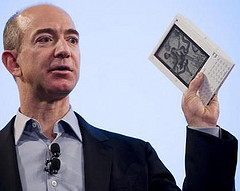
If Jeff Bezos owns the Washington Post for, say, twenty years, he will probably have to make a call like that. On his own. Without legal authority. bezospicsmallerSimply because he thinks it right. “Not the state but the public gets to decide this.” It may also be an icy gamble with the business, as Katharine Graham’s decisions were when she had to make them. No firewall between the Post and Amazon will necessarily be respected when the most powerful hidden hands in the world are motioning for you to back down.

We don’t know what Bezos will do. Neither does he. If, as is often said about him, he thinks long term, then he will answer that bell, and come out swinging. But that is not the test. The test is to know your strength, cooly survey the situation, and find a way to win.

After Matter: Notes, Reactions & Links

“I think if the American public knew what our government was doing, they wouldn’t be allowed to do it anymore.” These are the poignant words of Ladar Levison, founder of Lavabit, the secure email service that he voluntarily shut down when faced with some sort of demand from the U.S. government to reveal user information— which he cannot talk about for fear of being thrown in jail. But we know that Lavabit was used by Snowden to communicate with the outside world when he was stuck in the Moscow airport.

If the public knew what the government was doing, it wouldn’t be allowed to do it anymore. That is a perfect description of a Fourth Estate situation, where the only way democracy can work is if the press uncovers the truth and publishes it, bringing public opinion into play and changing the equation for people in power. If the press cannot come through and perform the way it should, the public will remain in the dark, and an illegitimate state action will persist. “My hope is that, you know, the media can uncover what’s going on, without my assistance,” Levison said. He’s like a whistleblower who will go to jail if he uses his whistle. All he can do is give truncated interviews. But it’s clear that Snowden’s determination “to embolden others to step forward” is working. Ladar Levison is proof.

All PressThink posts about Edward Snowden, journalism and the surveillance state

Politics: some / Politics: none. Two ways to excel in political journalism. Neither dominates. (June 13, 2013) “Edward Snowden’s decision to leak to Greenwald, and Glenn’s domination of newsland for several days, tells us that politics: none is not the only way of excelling in journalism. It now has to share the stage with politics: some.”

* No, Candy Crowley. That is not good enough. (June 16, 2013) “You have to know your stuff. You have to mute your instinct to reduce everything to the next election. This is serious business. We need interviewers who are dead serious about holding people accountable.”

David Gregory tries to read Glenn Greenwald and The Guardian out of the journalism club  (June 24, 2013.) “His premise packs a punch. For the criminalization of journalism is most likely to happen when normal relationships with sources get called ‘aiding and abetting’ by the state.”

* The Snowden effect: definition and examples. (July 5, 2013) “There’s what Snowden himself revealed by releasing secrets and talking to the press. But beyond this, there is what he set in motion by taking that action.”

* The Toobin principle. (August 6, 2013) “Repeal the concept of an informed public, repress your decision to take such a drastic step. But it’s not just Jeffrey Toobin. Congress did it too.”

* Edward Snowden, meet Jeff Bezos. (August 11, 2013) “What we do know about Snowden is something we don’t know about the new owner of the Washington Post: whether he can go up against the most powerful and secretive forces on the planet… and win.”

* When you’re in a Fourth Estate situation. (August 15, 2013) “As things stand today, the Fourth Estate is a state of mind. Some in the press have it, some don’t. Some who have it are part of the institutional press. Some, like Ladar Levison and Edward Snowden, are not.”

* Conspiracy to commit journalism. (August 20, 2013) “If sunlight coalitions are to succeed, they won’t succeed by outwitting surveillance. Not better technology, but greater legitimacy is their edge.”

* To make journalism harder, slower, less secure. (August 26, 2013) “That’s what the surveillance state is trying to do. It has the means, the will and the latitude to go after journalism the way it went after terrorism. Only a more activist press, working together, stands a chance of resisting this.”

* The NSA’s next move: silencing university professors? (The Guardian, September 10, 2013) “A Johns Hopkins computer science professor blogs on the NSA and is asked to take it down.”

* The BBC’s 16 questions to Glenn Greenwald. “Hey, that was a tough interview! No, not really.” (PressThink, Oct. 4, 2013)

* Why Pierre Omidyar decided to join forces with Glenn Greenwald for a new venture in news. “Word leaked out that Glenn Greenwald would be leaving the Guardian to help create some new thing backed by Pierre Omidyar, the founder of eBay. I just got off the phone with Omidyar. So I can report more details about what the new thing is and how it came to be.” (PressThink, Oct. 16)

* The limits of investigative reporting. “How two media accounts of the intrusive security state led to different political outcomes.” (American Review, Oct. 25, 2013.)

Photo credit: mattopenzeo, Creative Commons.

The Toobin principle

Repeal the concept of an informed public, repress your decision to take such a drastic step. But it's not just Jeffrey Toobin. Congress did it too.

6 Aug 2013 1:58 pm 169 Comments

Last week on his CNN program Piers Morgan had just about finished a little speech on how you can’t have any bloke with a security clearance spewing classified information “on a whim” when James Risen, national security reporter for the New York Times, interrupted him: which document that’s come out don’t you want to talk about? Meaning: which of the things we’ve learned from Edward Snowden would you, as a journalist, prefer not to know? Which part of the surveillance story that’s come to light should have remained in darkness?

It was a good question. Piers Morgan did not have much of a reply.

When, on the same program, Jeffrey Toobin of the New Yorker said that public discussion about previously classified materials was “a good thing” but he still thought Edward Snowden was a criminal and shouldn’t have done what he did, Risen interrupted: “We wouldn’t be having this discussion if it wasn’t for him,” he said. “That’s the thing I don’t understand about the climate in Washington these days, is that people want to have debates on television and elsewhere, but then you want to throw the people who start the debates in jail.”

It was a sharp observation. Jeffery Toobin didn’t have much of a reply.

The exchange begins at 7:30 on the clip below:

Ever since The Guardian began to publish its revelations from the files of Edward Snowden, I have been trying to frame the unanswered question that drives my own interest in the subject.

Disclosure: I am not pro-Snowden or anti-Snowden, because to put it that way unnecessarily personalizes the issue. I am not “for” the National Security Agency or against it. As a U.S. citizen I am implicated in what the NSA does, and I want it to succeed in discovering those who would harm us. My concern, as a writer and journalism professor, is with another fight: the one for public knowledge, for sunlight, for the facts to come out so we know what’s going on. I am primarily interested in the journalism that Edward Snowden has set in motion, and the gains in public knowledge that have resulted from his actions, which I have called the Snowden effect.

The question that bothers me most can be put this way:

Can there even be an informed public and consent-of-the-governed for decisions about electronic surveillance, or have we put those principles aside so that the state can have its freedom to maneuver?

I call it unanswered but it’s more than that. It’s like we can’t face it, so we choose not to frame it that way. The question is less unaddressed than it is repressed by a political system that can’t handle the weight of what it’s done. But now that system is being forced to face what happened while it wasn’t looking— at itself. I will show you the problem by quoting four writers who have touched on it. Apologies for the long quotes. But if you can follow me through them, there will be a payoff (in pressthink) at the end.

1. Everything from everybody

Fred Kaplan is on the war and peace beat for Slate. (He also has a PhD in political science.) Here he explains “how the NSA traveled down a slippery slope.”

“At first, they focused on tracking traffic patterns. Some phone number in the United States was calling suspicious people or places in, say, Pakistan. It might be useful to find out whose phone number it was. It might then be useful to find out what other people that person has been calling or emailing, and then it might be useful to track their phone calls and email patterns. Before you know it, they’re storing data on millions of people, including a lot of Americans. Then maybe one day, they track someone—a phone number or email address they’d never come across before—engaged in some very suspicious activity. They wish that they’d been tracking this person for some time, so they could go back and see if a pattern exists without having to wait for one to emerge. Then they learn that they can do this; new technology makes it possible. So they scoop up and store everything from everybody. They even convince themselves that they’re not ‘collecting’ data from American citizens (as that would be illegal); no, they’re just storing it; the collecting doesn’t happen until they actually go retrieve it from the files.”

Somewhere on the slope it slid down, the NSA realizes it has to get legal authority to collect it all. Kaplan explains:

So they ask the FISA court—created by Congress in the 1978 Foreign Intelligence Surveillance Act—to rule on whether this is permissible, and the court complies. Specifically, it rules that they can do this, as long as the material they’re storing is “relevant” to an investigation of terrorism, and the court buys the logic that the agency might need to go fetch data retroactively in such a probe. Therefore, everything is “relevant.”

The catch, as we now know, is that all of this—the ever-expanding surveillance in time and space, the reasoning behind it, and the FISA court ruling that approves it—has evolved at such high levels of secrecy that only a handful of people in Congress (very few people anywhere outside the NSA, and probably not all that many inside) know anything about it. This, it turns out, is what [Ron] Wyden, a member of the Senate Intelligence Committee, meant when he cryptically said, way back in October 2011, that “there are two Patriot Acts in America”—the one that anybody can read and a “secret interpretation that the executive branch uses” but that nobody on the outside knows about at all. The public Patriot Act allows “bulk” collection of data; the secret interpretation defines “bulk” far more bulkily than anyone could have imagined.

And here’s the problem. The program was supposed to have checks and balances, but really it doesn’t, not anymore.

“They scoop up and store everything from everybody.” The American public didn’t know about that. The American people never voted for that. It’s doubtful that, sufficiently informed, public opinion would consent to that. Even so, it’s possible to argue that “consent of the governed ” was maintained because key committees in Congress were informed. Congress also created the FISA court and gave it these powers.

But that’s not enough. “Blind” consent can easily be abused. The only possible check on that is public knowledge and open debate. Not for everything, of course (there have to be secrets) but for really big things like “scoop up and store everything from everybody.” Not consent at some point in the process but informed consent for big decisions throughout the process: that is the check. It’s impossible when everything is done in secret, which is why Kaplan says: “The program was supposed to have checks and balances, but really it doesn’t.”

2.  A discussion the public cannot afford to have. 

Will Wilkinson in The Economist picks up the story from there. He’s more alarmed than Kaplan.

You see, democracy here at home must be balanced against the requirements of security, and it is simply too dangerous to leave the question of this balance to the democratic public. Open deliberation over the appropriate balance would require saying something concrete about threats to public safety, and also about the means by which those threats might be checked. But revealing such information would only empower America’s enemies and endanger American lives. Therefore, this is a discussion Americans can’t afford to have. Therefore, the power to determine that this is a discussion the public cannot afford to have cannot reside in the democratic public. That power must reside elsewhere, with the best and brightest, with those who have surveyed the perils of the world and know what it takes to meet them. Those deep within the security apparatus, within the charmed circle, must therefore make the decision, on America’s behalf, about how much democracy—about how much discussion about the limits of democracy, even—it is safe for Americans to have.

A “discussion the public cannot afford to have” repeals the principle of an informed citizenry. But the decision to let things evolve in that way was hidden from public view. Those who wanted to show it to us were prevented from doing so– or prosecuted in the case of some whistle blowers. Wilkinson:

It is crucial, then, that any attempt by those on the inside to reveal the real, secret rules governing American life be met with overwhelming, intimidating retaliation. In order to maintain a legitimizing democratic imprimatur, it is of course important that a handful of elected officials be brought into the anteroom of the inner council, but it’s important that they know barely more than that there is a significant risk that we will all perish if they, or the rest of us, know too much, and they must be made to feel that they dare not publicly speak what little they have been allowed to know. Even senators. Even senators must fear to describe America’s laws to America’s citizens.

An informed public is not really possible under those conditions. And yet those conditions were approved by elected representatives. But they never shared with the voters what they were doing. Some in Congress realized the problem but they were helpless to do anything about it.

3. Free to mislead us.

Here’s Timothy Edgar, a lawyer who was on the inside (he worked for the Director of National Intelligence) writing in the Wall Street Journal.

The FISA court may have reviewed the programs, but the public never got its day in court. The ACLU has challenged the constitutionality of NSA surveillance programs for years, but that case never got to the issue of constitutional rights. The intelligence community argued, and the Supreme Court agreed, that the civil-liberties groups couldn’t maintain their lawsuit. Civil-liberties advocates represented a variety of people with entirely reasonable fears of monitoring. Whether they were actually under surveillance was a secret (and properly so). The government argued vigorously that this secrecy meant the case could not go forward, and the court agreed.

Aye: “The public never got its day in court.” As with the legal system, so with the Congress. Open debate never got its chance. Edgar :

Sens. Ron Wyden and Mark Udall encountered a similar Catch-22 in 2011 when trying to raise questions about the NSA call-records program, when the Patriot Act was up for review. Although they were briefed on the program behind closed doors, they made no headway in arguing for greater transparency with the public. The resulting debate was highly skewed. Administration officials were free to make misleading arguments that the Patriot Act was just like an ordinary subpoena. Any member of Congress willing to spend a few hours in a small room in the Capitol knew that secret court opinions had approved collection that reached far wider than any subpoena. Those who did know about the opinions could not express any concerns in open debate. Secrecy prevented the Congress, like the Supreme Court, from having a real argument over surveillance powers.

No real argument = zero possibility for informed consent. Administration officials who are free to mislead are liberated from the check that a free press and an inquisitive Congress are supposed to provide. A democracy that is not permitted to know the “secret rules” adopted by the state cannot operate properly. Will Wilkinson thinks the whole system is illegitimate, a sham. Timothy Edgar thinks the public would approve if it knew more about the safeguards in place. Fred Kaplan is somewhere in the middle; he thinks the NSA is in trouble, and recommends reforms. But they all agree that the necessary checks and balances had disappeared.

These include an informed public. That principle had been repealed for scrutiny of the surveillance state. But no one ever put it that way. And they still don’t. It was too big to face, so bit-by-bit a decision was made not to face it. Repressed is the right word for that.

4. A choice not to be informed.

Edward Snowden is the return of the repressed. By going AWOL and leaking documents that show what the NSA is up to, he forced Congress to ask itself: did we really consent to that? With his disclosures the principle of an informed public roared back to life. Writing at MSNBC.com about documents de-classified by the Director of National Intelligence in advance of his testimony before the Senate, Adam Serwer puts it all together:

The reports affirm that the current backlash in Congress is a product of public knowledge of the programs. Some legislators, like Democratic Sens. Ron Wyden of Oregon and Mark Udall of Colorado, had been making public statements for years that hinted at information members of Congress were being told in private. Legislators who say they were ignorant about how the authorities were being used prior to the revelations effectively made a choice not to be informed. They then voted to reauthorize these laws without knowing what they actually did. Those legislators who were exercising their oversight responsibilities and were concerned about surveillance couldn’t inform the public in detail about what was happening. Far from affirming the Obama administration’s insistence that congressional oversight serves as a key check on executive branch authority, it mostly raises the question of whether effective oversight can be conducted in secret.

Some in Congress “made a choice not to be informed.” Those who tried to exercise oversight were prevented from informing the rest of us. (But Bruce Ackerman says they could have busted through that.) Then Snowden came along and blew everything up. Adam Serwer comments:

Absent former NSA contractor Edward Snowden’s leaks to The Guardian and the Washington Post that sparked the controversy, the current debate over surveillance powers wouldn’t even be happening. As long as the information was secret, legislators could renew these authorities without having to worry about a public backlash. It was only the leaks that spurred Congress into doing its job. That leaves legislators pushing to curtail government surveillance powers in the awkward position of owing their political momentum to a man the Obama administration wants extradited and prosecuted for espionage.

Right. It’s the same contradiction Jeffrey Toobin of CNN is caught in. He doesn’t think Snowden should have done what he did. But Toobin does think the debate that Snowden started “is a good thing.” When James Risen pointed this out (“We wouldn’t be having this discussion if it wasn’t for him”) Toobin — mindlessly — agreed. “That’s true,” he said. (It’s at 8:15 on the clip.) At this point Toobin has no idea what he’s saying. The only coherent position available to him is to argue for the repeal of an informed public: “Piers, this debate we’re having right now, it’s a bad thing!”

But he doesn’t have the courage or self-awareness required to say that on television. At some point he internalized the idea of a “discussion the public cannot afford to have,” then repressed any memory of having done that. That’s why he welcomes a debate that he would also welcome the prevention of. But Congress did the same thing. So did President Obama. The Toobin principle: repeal the concept of an informed public, repress your decision to take such a drastic step because it’s too much to face.

Let me go back to my unanswered question:

Can there even be an informed public and consent-of-the-governed for decisions about electronic surveillance, or have we put those principles aside so that the state can have its freedom to maneuver?

People who make a career in journalism cannot pretend to neutrality on a matter like that. If a free society needs them — and I think it does — it needs them to stand strongly against the eclipse of informed consent.

After Matter: Notes, Reactions & Links

Over at the Atlantic site, Conor Friedersdorf builds upon this post by going back to look at how the debate over, and news coverage of the re-authorization of the Patriot Act in 2011 was disabled by secrecy. This made informed decision-making and genuine public opinion impossible.

Even those elected representatives informed about the full extent of government surveillance were deprived of normal legislative practices, like floor debate, letters and phone calls from constituents, input from experts outside government, and public opinion polls, that properly factor into their typical deliberation and voting decisions.

That’s it, exactly, Conor.

Security and privacy expert Bruce Schneier writes on the virtually the same subject I addressed here:

Both government agencies and corporations have cloaked themselves in so much secrecy that it’s impossible to verify anything they say; revelation after revelation demonstrates that they’ve been lying to us regularly and tell the truth only when there’s no alternative.

There’s much more to come. Right now, the press has published only a tiny percentage of the documents Snowden took with him. And Snowden’s files are only a tiny percentage of the number of secrets our government is keeping, awaiting the next whistle-blower.

Ronald Reagan once said “trust but verify.” That works only if we can verify. In a world where everyone lies to us all the time, we have no choice but to trust blindly, and we have no reason to believe that anyone is worthy of blind trust. It’s no wonder that most people are ignoring the story; it’s just too much cognitive dissonance to try to cope with it.

That’s why I used the word “repressed.”

Ars Technica asked Schneier (“one of the world’s foremost cryptographers”) what he would do to fix the problems with trust and verification:

The way Schneier sees it, in an attempt to keep the operational details of the targets secret, the NSA (and presumably other intelligence agencies, too) has also claimed that it also needs to keep secret the legal justification for what it’s doing. “That’s bullshit,” Schneier says.

The famed computer scientist wants to apply traditionally open and public scrutiny to how the NSA operates.

“How much does this stuff cost and does it do any good?” he said. “And if they can’t tell us that, they don’t get approved. Let’s say the NSA costs $100 million annually and that an FBI agent is $100,000 a year. Is this worth 1,000 FBI agents? Or half and half? Nowhere will you find that analysis.”

When the CEO and editor-at-large of Foreign Policy magazine is saying: it took me a while, but now I see why Snowden was necessary… it means the elites in Washington are waking up to something big.

Eugene Robinson of the Washington Post did D.C. residents a big favor earlier this week when he courageously acknowledged the service Edward Snowden did for the United States… and for the global debate on rights and privacy in the big data era. I have myself been too slow to recognize that the benefits we have derived from Snowden’s revelations substantially outweigh the costs associated with the breach. It is time we move from the kind of Patriot Act thinking that overstates security threats to such a degree that we subordinate our basic freedoms to something more consistent with our historical systems of checks and balances.

Law professor and former Assistant Attorney General Jack Goldsmith on a theme similar to the one I explore here:

Presumptively in our democracy, important national policies are vetted in public, subject to criticism and analysis in the press and by elected representatives and civil society and courts, and ultimately approved, or not, by the People in elections. The accountability system forces public officials to justify their actions, to address criticisms, to confront new and critical information and arguments, to consider new approaches, and to correct mistakes. This messy process does not always produce optimal policies. But it produces pretty good policies on the whole, allows for pretty robust policy change in light of new information, and in any event is a more legitimate system for executing public policy than one that takes place in secret.

Few of the traditional elements of democratic scrutiny and deliberation apply to the NSA. Even after the Snowden affair, NSA and its oversight bodies remain extraordinarily secretive.

In a guest post at TechDirt, Jennifer Hoelzer, a former staffer for Senator Ron Wyden, provides enormous detail on how for years he was prevented from informing the public about where the surveillance state had gotten to in the U.S. It is quite a tale.

Matt Welch of Reason magazine on the Obama Administration observance of the Toobin principle:

We are totally ready to have this conversation we have been actively trying to suppress, we are being transparent in our non-transparency, and in the name of openness and deliberation we must smother this attempt at open deliberation.

At ThinkProgress, Zack Beauchamp responds to this post, usefully: A Guide To Thinking About NSA Surveillance And Democracy.

Josh Stearns adds further background and fleshes out the argument in this post. Stearns reminded me of this: “My sole motive,” Edward Snowden told the Guardian in his first public interview, “is to inform the public as to that which is done in their name and that which is done against them.”

“A grandiose narcissist who deserves to be in prison.” Jeffery Toobin on Snowden in June:

The American government, and its democracy, are flawed institutions. But our system offers legal options to disgruntled government employees and contractors. They can take advantage of federal whistle-blower laws; they can bring their complaints to Congress; they can try to protest within the institutions where they work. But Snowden did none of this. Instead, in an act that speaks more to his ego than his conscience, he threw the secrets he knew up in the air—and trusted, somehow, that good would come of it. We all now have to hope that he’s right.

The rise of the personal franchise site in news

"This is in many ways how major media has domesticated blogging."

23 Jul 2013 4:47 pm 20 Comments

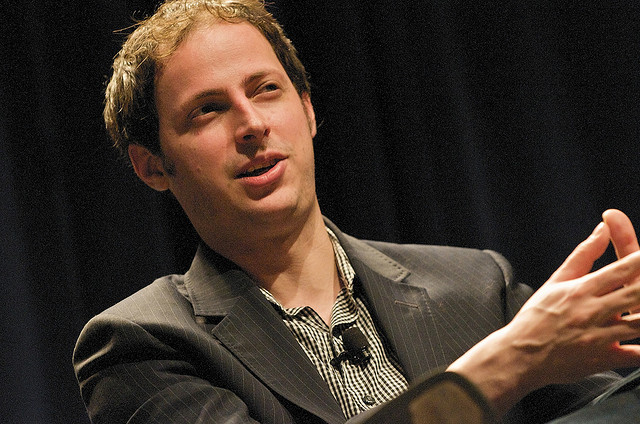
Yesterday the buzz in newsland was all about Nate Silver’s decision to move his FiveThirtyEight.com franchise from the New York Times to ESPN. (Good round-up here.) A subplot was provided by public editor Margaret Sullivan. natesilver She described Silver as an awkward fit for the Times newsroom and an object of resentment among some political reporters.

This led to something I had never seen before. Damien Cave, a Times correspondent in Mexico City, appealed on Twitter to his unknown Times colleagues on the political beat who had resented Silver. Cave wanted them to come out publicly and explain themselves. “It’s a debate worth having,” he said. (Didn’t happen.) After Jack Shafer of Reuters wrote that Silver “may be the only Times employee who gave the paper more than the paper ever gave to him,” Binyamin Appelbaum, a reporter in the Times Washington bureau, sent this acid reply.


Shadid, one of the greatest foreign correspondents in Times history, gave his life while covering the civil war in Syria.

Let’s step back from the sniping to look at the rise of the personal franchise site, which Silver said was a big factor in his decision. The category includes:

* Dealbook, built around Andrew Ross Sorkin, New York Times. It covers Wall Street dealmaking.
* Wonkblog, built around Ezra Klein, Washington Post. Politics and public policy.
* Fivethirtyeight.com, to be built around Nate Silver, ESPN. Data-driven coverage of sports, politics, business, weather, culture.
* Grantland, built around Bill Simmons, ESPN. Writerly coverage of sports and popular culture.
* MMQB, which launched yesterday around Peter King, Sports Illustrated. NFL football.
* AllThingsD, built around Walter Mossberg and Kara Swisher, Dow Jones. Technology news.

Key features of the personal franchise site:

* Star journalist at the center with a large online following and cross-platform presence. (Six of the seven I named are male.)
* Editorial control rests largely or entirely with the founder and personality at the center.
* Part of a larger media company with a negotiated balance of power between the two states. (See Shafer on this.)
* Identifiable niche or niches; no attempt to be comprehensive. (It’s all Things Digital, not all things business.)
* Plenty of voice, attitude and personal expression allowed.
* Mix of news, opinion, analysis without a lot of fuss about categorizing each.
* Additional journalists are hired as the franchise succeeds and the founder gets to hire them.

Why are we seeing the growth of this state-within-a-state model?

1. Multiple shifts in power in the media business, which I described here, have converged around this model. One sign of that power shift: Many argued for it, but only Andrew Sorkin was able to insist that Dealbook stand outside the Times pay meter system and remain free.

2. As Josh Marshall of Talking Points Memo (an independent personal franchise site) said: “This is in many ways how major media has domesticated blogging.” In other words: “It takes some of the voice, idiosyncrasy and focus of blogging and scales it with the resources and audience numbers independents really cannot muster.”

3. Brands still mean something as a guarantor of quality and huge audiences attach to them, but they are weak on voice, which creates loyalty. Loyalty moves across platforms as platforms shift. The state-within-a-state model solves for that, as Marshall suggested.

4. Digital metrics allow media companies to measure the worth of the individual journalist in a way that was not possible before. That makes it possible to rationalize the investment in a personal franchise site. And of course the star journalist can look at those numbers too and use them as leverage.

5. As Marshall, Andrew Sullivan, Om Malik and others have shown, it’s possible to do the same thing as an independent, but fewer journalists have the determination and ingenuity to run their own business. Also: Big Media has the lawyers and that’s got to be a huge relief.

6. I think news executives are somewhat intimidated by the enormity of the culture shift required within legacy organizations. Instead of trying to renovate the ideology of professional newswork, a huge task that invites grandstanding, it’s easier for the editors of the Washington Post to let Ezra Klein do his (already shifted) thing and then add people to that franchise. They avoid a holy war over news vs. opinion while quietly letting the distinction corrode. Note that Klein is one of the Post’s most important political journalists but within the newsroom he is officially classified as a opinion columnist for the business section. This is a recognition that the formal structure makes no sense. The personal franchise site allows for innovation without toppling certain fictions that editors and some reporters hold dear.

Photo of Nate Silver by JD Lasica (Creative Commons.)

Criticizing CNN: Goodbye to that.

I used to say: I criticize because I care. But I no longer do.

8 Jul 2013 3:15 pm 95 Comments


As of today, I have retired from criticism of CNN for falling short of some sort of journalistic standard that news providers should maintain. That activity no longer makes sense. Let someone else receive the “ratings, you idiot” replies on Twitter. I’m done. I’m pretty sure you don’t care about this announcement, either. Which nicely illustrates why I’m done.

The immediate cause of action is an amusing but also telling column by Jack Shafer of Reuters: In praise of tabloid TV, which explains why critics of CNN are absurd creatures. If you want coverage of Egypt instead of the Zimmerman trial there’s plenty of places to find it and besides audiences have always loved murder trials, so who are you to tell them they shouldn’t?

Shafer uses something I wrote as his “ha ha, how clueless can you get?” text: this little 99-word Tumblr post. That was kind of annoying because as far as I can tell Shafer agrees with everything I wrote. CNN is making its priorities clear when it sticks with the Zimmerman trial while world events are breaking. Murder trials are like a TV series. Jeff Zucker, CNN’s new president, does want “everyone in his company to know what the priorities are: Mini-series in the center, world events off to the side.” Shafer writes:

In today’s media environment, the media critic who insists that the cable networks follow Egypt and drop Zimmerman is like the nudging dining companion who wants to order both his meal and yours, lest you embarrass him by mistakenly ordering the burger and fries.

Which is a good line. The fact that no one in journalism bats an eye when Shafer equates CNN with “tabloid TV” tells us why I am out of the game. Some other reasons:

1. Jon Stewart does it better.

2. CNN makes $600 million a year for Time Warner, but if you challenge one of their ratings-driven decisions the main thing you hear back is: hey, they have a huge business problem on their hands. What can you say to that?

3. The other thing I hear back ad nauseum is: “Jay, watch CNN International, so much better.” Uh… okay. I don’t have CNN International in my cable package, but I do know how to change the channel. So thanks!

4. Even where you might expect to find resistance to what CNN has become – among journalists – you do not. Here’s Dylan Byers, media columnist for Politico:

The Zimmerman trial will likely be a ratings boon for all cable networks, including MSNBC and Fox News, which have also been heavy on the courtroom coverage. CNN’s domestic outfit understands the same way Time Magazine does that most Americans don’t know much about world events, and don’t care to — John King even admitted as much last year.

The truth is, CNN’s programming decisions aren’t a reflection of CNN so much as a reflection of the American people, more of whom care about a domestic court trial than about the historic events taking place overseas. Right now, CNN International is broadcasting wall-to-wall coverage from Egypt. The fact that CNN’s domestic channel isn’t should tell you what executives there think about the American people’s interests. And sure, CNN could take the lead and cover what they think the American people should care about, but that’s not necessarily a great business strategy.

Frame check: “Ratings, so shut up” vs. “eat your spinach,” with a side order of “Americans don’t care.” None of this describes what I was trying to accomplish by criticizing CNN, but that’s over now. I’m retired.

5. What I was trying to accomplish by criticizing CNN has been overridden by Jeff Zucker. Here’s what I mean. CNN’s problems were well stated a few years ago by a competitor, Phil Griffin, head of MSNBC, who asked: “What do they stand for?” That is the million dollar question. cnnegyptThe answer CNN people had always given was pretty simple: breaking news! When big events happen the world turns to CNN. That’s who we are. That’s what we do. At CNN, they used to say, “the news is the star.” The problem with this answer eventually became well known. What causes people to tune in when there is no big breaking news? Fox and MSNBC have their ways of creating loyalists, what does CNN have? Wolf Blitzer? Erin Burnett?

I admit this is a hard problem. I didn’t have an answer, either, but as a critic I tried to make a few suggestions that would at least get the discussion out of the left/right/center rut. The most promising direction, I thought and still think, was latent in a catch phrase that Anderson Cooper uses: keeping ’em honest. CNN could have tried to become the fact-checking network, the “no bull” channel, the place that did away with both “he said, she said” and news for party loyalists, where repeating the talking points got you booted from the rolodex and performances like this became the norm. There were even some hints that network execs were moving in that direction. Of course the challenge would be to make it interesting television but on that score I thought “no bull” a long way from “eat your spinach.”

Zucker has ended that by giving his own answer to Phil Griffin’s question: what do they stand for? The same thing Entertainment Tonight stands for! Television that occupies your attention, not for a purpose but merely for a while. Another answer might be “drama without dramatists,” meaning: drama where the plots and characters are provided by the people unlucky enough to be caught up in tabloid-ish or flashpoint events. Trials are ideal for that, but so is the poop ship. Criticism of these tactics actually tells Zucker that he is on the right track. Now the ratings are up relative to his competitors, and nothing ends the conversation like an uptick in the numbers. Unless it’s bringing back Crossfire, which is like saying, CNN: brain dead and proud of it.

6. David Carr, media columnist for the New York Times, once wrote: “By marketing itself as the most trusted name in news, CNN is and should be held to a higher standard.” I thought that way too. But now I realize that not enough people join in Carr’s belief, inside or outside CNN. And without it there’s no traction.

So I’m saying farewell. I used to say: I criticize because I care. But I no longer do. I’m turning this beat over to James Poniewozik, Time magazine’s gifted television writer. CNN is TV, popular enough to remain on the air. That’s pretty much all you can say about it now. That and: ratings, so shut up.

After Matter: Notes, Reactions & Links

Former CNN producer and  executive Sid Bedingfield: Is It Time to Give Up on CNN?

I rarely criticize CNN in public, partly out of loyalty, but also to avoid hypocrisy. No one spends 20 years in cable news and comes away entirely clean. In this case, however, I’m tempted to agree with Jay Rosen, who believes it’s time to give up on CNN.

His analysis of the Zimmerman coverage is acute. Read it.

The New Republic: CNN Is Bad at Tabloid Journalism.

The worst kind of tabloidism is boring tabloidism, which was what CNN had devolved into by Tuesday night. Its headlines were sensational (“SELF DEFENSE OR MURDER?”), but its content was mostly not. So it is not the fanatical coverage of the Zimmerman trial or the relegation of Tahrir Square to a tiny box in the corner of the screen that feels most symptomatic of the network’s general decline. It’s the moments when even CNN’s nightly news programs, the one opportunity for some analytical distance, participate in the trial’s vacuity instead of stepping back to interrogate it.

Adweek: Zucker’s Changes at CNN Are Already Bearing Fruit. I couldn’t ask for a better illustration of why I’m done.

The good ship CNN is riding a little higher on the waves. After months of plummeting ratings and a high-profile game of C-suite musical chairs, the original cable news network is catching up to its competitors in the core demo and showing significant year-over-year gains. And while a fall resurrection of Crossfire and the June launch of the morning show New Day are drawing ink, president Jeff Zucker is making other, more subtle changes, too.

For one thing, CNN’s anchors are appearing on each other’s shows…

When the encouraging news (other than the ratings) is that CNN anchors are appearing on each other’s shows, it’s time for a press critic to direct his gaze elsewhere, don’t you agree?

Inside Cable News reacts to this post.

Zimmerman will pass. There will be a verdict and the cable channels will move on. It is where CNN moves on to that we need to watch. And that’s why I think that thowing in the towel as Rosen has apparently done is a tad premature. Maybe CNN is indeed hopeless and innoculated against meaningful criticism. Even if it was, I would hope that people would criticize it nonetheless. Because if there is no criticism from a source that counts (which automatically excludes Jon Stewart and his “I’m just a comedian” crutch he trots out all too often) then how can the network’s coverage be measured if there is no counter argument to contrast it to?

If CNN had an ombudsman, the situation might be different. There would at least be an office to which one could appeal. Now we understand why a company making $600 million a year cannot afford that position, although strangely NPR has one and they ran at a deficit last year.

Short Form Blog, a major force on Tumblr, replies to the question, “Isn’t it possible that the backlash against CNN’s coverage of the George Zimmerman case is in and of itself racially motivated?”

CNN and the Problem With the ‘Egypt or Trayvon’ Question. At Foreign Policy magazine’s site, Joshua Keating asks: “Isn’t it the network’s job to tell viewers why they have to pay attention to a story and to make it interesting to them?”  That job description is exactly what’s being abandoned at CNN, Josh.

In reply to criticism of its wall-to-wall Zimmerman coverage, Jeff Zucker says… exactly what you would expect him to say. No light escapes his reply. But there was this:

Zucker also said that a criticism that CNN has not had enough conservative points of view on the air is a fair one and he’s working to correct that.

Good to know. Here are the ratings for July 10, as the Zimmerman trial was cresting.


Now this is what I mean by brain dead. The alternatives as posed by Dan Abrams: wall-to-wall Zimmerman trial or inane gotcha coverage. Abrams is currently working for ABC News as a legal analysis.

Perfect! Deadline Hollywood, the entertainment industry news and gossip site, describes me as an “industry navel-lint gazer” and says it will hold me to that pledge to retire from CNN criticism.

The Snowden Effect: definition and examples

It's about what he set in motion by taking the action he did.

5 Jul 2013 10:33 am 61 Comments

The Snowden effect, a definition:

Direct and indirect gains in public knowledge from the cascade of events and further reporting that followed Edward Snowden’s leaks of classified information about the surveillance state in the U.S.

Meaning: there’s what Snowden himself revealed by releasing secrets and talking to the press. But beyond this, there is what he set in motion by taking that action. Congress and other governments begin talking in public about things they had previously kept hidden. Edward_Snowden-2 Companies have to explain some of their dealings with the state. Journalists who were not a party to the transaction with Snowden start digging and adding background. Debates spring to life that had been necessary but missing before the leaks. The result is that we know much more about the surveillance state than we did before. Some of the opacity around it lifts. This is the Snowden effect.

It is good for public knowledge. And public knowledge is supposed to be what a free press and open debate are all about.

Examples: (updated several times after July 5)

1. As reported on July 4:

Days after President François Hollande sternly told the United States to stop spying on its allies, the newspaper Le Monde disclosed on Thursday that France has its own large program of data collection, which sweeps up nearly all the data transmissions, including telephone calls, e-mails and social media activity, that come in and out of France. (Le Monde.)

So the Snowden effect is international. Canada, for example. Or Brazil.

2. On July 3, Reuters reported on the “long history of close cooperation between technology companies and the intelligence community.”

Former U.S. officials and intelligence sources say the collaboration between the tech industry and spy agencies is both broader and deeper than most people realize, dating back to the formative years of Silicon Valley itself.

A similar story ran in the New York Times on June 19. It told of “the increasingly deep connections between Silicon Valley and the [NSA] and the degree to which they are now in the same business.”

3. In a superb story by four reporters on June 15, the Associated Press expanded the frame:

The revelation of Prism this month by the Washington Post and Guardian newspapers has touched off the latest round in a decade-long debate over what limits to impose on government eavesdropping, which the Obama administration says is essential to keep the nation safe.

But interviews with more than a dozen current and former government and technology officials and outside experts show that, while Prism has attracted the recent attention, the program actually is a relatively small part of a much more expansive and intrusive eavesdropping effort.

4. Expanding the frame in a different way, the McClatchy Washington bureau reported on the Obama Administration’s extremely aggressive crackdown on leaks: (June 20)

President Barack Obama’s unprecedented initiative, known as the Insider Threat Program, is sweeping in its reach. It has received scant public attention even though it extends beyond the U.S. national security bureaucracies to most federal departments and agencies nationwide.

“This has gotten scant public attention; let’s remedy that.” So goes the Snowden effect. McClatchy followed up on its original report with more scrutiny of the Insider Threat program on July 9.

5. On June 15 Bloomberg reported that “thousands of technology, finance and manufacturing companies are working closely with U.S. national security agencies, providing sensitive information and in return receiving benefits that include access to classified intelligence.”

These programs, whose participants are known as trusted partners, extend far beyond what was revealed by Edward Snowden, a computer technician who did work for the National Security Agency.

6. Two days ago, a report in the New York Times explained how Senators Ron Wyden and Mark Udall are “trying to force intelligence officials to provide answers for the public record” about matters already familiar to them from secret briefings given to Congress. The key phrase is “answers for the public record.” That is the core of the Snowden effect. (More on this.)

7. On June 25, the National Security Agency had to take down two fact sheets it had posted online after Wyden and Udall complained that they contained misinformation. The documents were themselves an example of the Snowden effect, as Politico reported:

The documents, still available here, were published in the wake of revelations about the extent of the NSA’s surveillance programs. They sought to highlight the safeguards the NSA uses to make sure American communications aren’t caught up in its surveillance — or if they are, what the NSA does to remove identifying information about U.S. citizens.

In other words, the NSA – often called the most secretive agency in the government – felt it had to explain itself. This is good for public knowledge. Two U.S. Senators then fact checked the NSA, which is even better.

8. Jack Shafer of Reuters predicted the Snowden effect in his June 8 column. “This will now fuel new cycles of reporting, leaks and scoops — and another, and another — as new sources are cultivated and reportorial scraps gathering mold in journalists’ notebooks gain new relevance and help break stories.” He was right.

9. Did you know that the United States Postal Service “computers photograph the exterior of every piece of paper mail that is processed in the United States — about 160 billion pieces last year?” I did not. The New York Times reported on it July 3rd. As Ethan Zuckerman notes, the Smoking Gun website had the story on June 7 but few saw it. The Snowden effect works like that. It widens the circle of people who know, even if the knowledge had been available before.

10. On the front page of the New York Times, Scott Shane reported on a kind a “parallel Supreme Court,” FISA, making new and consequential law in secret. This brought a discussion that had taken place on legal blogs to a much wider public. The Wall Street Journal followed up the next day with more details on a secret interpretation of the law. And on July 15, Adam Liptak of the Times added more with his Double Secret Surveillance.

A final note: The Snowden effect is far more important than the Snowden saga, meaning: the story of what happens to him as the United States pursues his capture and arrest, plus what comes out about his background and motivations. But I would not call his personal story a “distraction” from the real story. That’s not right. Who he is, what kind of access he had, why he did what he did, and even the arguments about whether he’s a disloyal creep or a profile in courage are inescapably part of the larger story and the public debate it has triggered. (Read Matt Cooper of National Journal on this issue.) You can’t wish for more public attention to the surveillance state and then scoff at one of the means by which people come to the larger story, which is his story. But I repeat what I said: the Snowden effect is ultimately more important than the Snowden saga.

After Matter: Notes, Reactions & Links

A timeline of all the major revelations from the Snowden files at the Al Jazeera America site.

On June 17, President Obama said he wanted a “national conversation” on the NSA’s secret collection of data. Slowly, haltingly, and with great difficulty he is getting just that– because of the Snowden effect.

First use of the term “Snowden effect” that I can find is by Esquire’s Charles Pierce here. Also see his follow-up.

Whether he likes it or not, this is the ‘national conversation’ that the president said he wanted. Edward Snowden, world traveler, international man of luggage, made it impossible to avoid.

July 9: The Snowden effect is well captured in the public hearings before the Privacy and Civil Liberties Oversight Board. The hearings are one of Obama’s responses to the sense of public alarm created by Snowden’s original revelations. They are starting to produce:

A former federal judge who granted government surveillance requests has broken ranks to criticise the system of secret courts as unfit for purpose in the wake of recent revelations by NSA whistleblower Edward Snowden.

July 10: Scott Shane of the New York Times reports directly on the Snowden effect:

It is still unclear whether Mr. Snowden, the 30-year-old former N.S.A. contractor now holed up at a Moscow airport, will escape punishment. But he has succeeded in opening the government spying’s trade-offs between civil liberties and security to the broadest and best-informed public debate in many years, even as intelligence officials are horrified at the exposure of their methods and targets.

Underneath all this is a troubling question: can there even be an informed public and thus “consent of the governed” for the national security state? Or have we in effect done away with those concepts? This essay by Will Wilkinson in the Economist is the best thing I have read on that subject:

You see, democracy here at home must be balanced against the requirements of security, and it is simply too dangerous to leave the question of this balance to the democratic public. Open deliberation over the appropriate balance would require saying something concrete about threats to public safety, and also about the means by which those threats might be checked. But revealing such information would only empower America’s enemies and endanger American lives. Therefore, this is a discussion Americans can’t afford to have.

This post was chewed over by a panel of observers on MSNBC: Debating the Snowden Effect.

Reuters: Latin American nations fuming over NSA spying allegations.

Yahoo is fighting for the right to reveal its struggle with the NSA over demands that the company said it resisted. The court documents are currently secret.

In a rare legal move, Yahoo is asking a secretive U.S. surveillance court to let the public see its arguments in a 2008 case that played an important role in persuading tech companies to cooperate with a controversial government data-gathering effort.

“Let the public see its arguments.” That’s the Snowden effect. So is this: Microsoft asks the Attorney General for permission “to share publicly more complete information about how we handle national security requests for customer information.”

July 16: Update on Yahoo’s fight to force “public disclosure of the company’s attempts to distance itself from the NSA’s Prism program.”

July 17: The Snowden effect visits Congress and restores bipartisanship:

Top Obama administration officials, appearing before a House committee to defend controversial government surveillance programs, ran into tough questions Wednesday from lawmakers of both parties, who expressed deep skepticism about the bulk collection of Americans’ telephone records and other communications.

The programs ignited a furor in the United States and abroad when they were publicly disclosed six weeks ago by former National Security Agency contractor Edward Snowden.

July 18: A large and fascinatingly diverse coalition of internet companies, non-profits and journalism groups (including the American Society of News Editors) sends an open letter to Obama and Congressional leadership:

We the undersigned are writing to urge greater transparency around national security-related requests by the US government to Internet, telephone, and web-based service providers for information about their users and subscribers.

The list of signers is itself an instance of the Snowden effect. James Risen of the New York Times on the significance of the letter and the fact that the telephone companies did not join:

While prominent Internet companies are pushing for fuller disclosure, some of the nation’s largest telecommunications firms were not willing to sign on, according to several people involved in the coalition. Some of those businesses have previously received legal immunity from Congress for their involvement with the Bush administration’s warrantless wiretapping program, and have close and longstanding ties to the N.S.A.

But the Silicon Valley Internet firms that did sign did so because they are increasingly concerned that the N.S.A. controversy that erupted in the wake of Mr. Snowden’s disclosures could damage their credibility, particularly with customers overseas.

July 22: Dana Priest of the Washington Post reviews how the NSA got so huge. She also pinpoints the Snowden effect:

The NSA’s ability to capture, store and analyze an ever greater amount of people’s communications has never been accompanied by public explanations of new legal authorities, programs or privacy safeguards. Only the unauthorized disclosure of these secrets has forced officials to explain them in broad terms, reassure the public and complain about the damage from their public airing.

July 24: The latest NBC/WSJ poll includes favorability ratings on Snowden. It asks Americans if they view him positively or negatively, like a presidential candidate or Speaker of the House. This to me is an extreme example of personalizing the issue. Why does it matter if Americans have warm, cool or indifferent feelings about Snowden? If they don’t “like” or approve of him, does that mean they do approve of the NSA’s methods? Pollsters could get at that by asking about those methods directly– and they have. Snowden isn’t running for anything. He’s not asking for Americans to love him. I fail to see what purpose the question serves, and if it was thought through what the thinking was. To me it just seems like self-trivializing behavior by NBC and the Wall Street Journal.

July 25: Part of the Snowden effect is not only additional reporting but open debate and democratic decision-making where there had been none like that before. A direct example: On July 24 the House of Representatives debated — and voted on — an amendment to a defense spending bill that would have cut off funding for the National Security Agency’s bulk collection of the telephone records, which was revealed in the first article The Guardian published based on Snowden’s leaks. The fact that the leadership let it go to a vote was startling. Even more startling: there were YES and NO votes in both parties and some suspense over the outcome: a narrow defeat for the amendment, 205 to 217. So here we have a pitifully rare instance of representative democracy actually working the way the school books describe — a real debate, a real vote of real consequence — and it sprang directly from what Snowden revealed. The interval from published story to House vote: seven weeks.

July 26: First the Snowden effect forced officials from the surveillance agencies to testify in the open before Congress. Now the concern that Congress has only heard from “one side” has led to an invitation for critics — including The Guardian’s Glenn Greenwald — to testify before the House.

July 31: As an account in Forbes put it: “The ‘Snowden Effect’ was in full force on Wednesday… The Director of National Intelligence declassified documents about its bulk collection of phone and email metadata and an example of the court authorization to collect, store and query that data.” That’s a gain in public knowledge. See Adam Serwer for more on politics of that release.

August 1: If this isn’t the Snowden effect, I don’t what is. From the New Zealand press, the McClatchy Washington bureau gets wind of possible spying on its reporter, then sends a letter to Director of National Intelligence James Clapper asking for clarification, and receives a reply in two days: “Director Clapper has reviewed the letter and directed his staff to immediately look into the issues raised. He looks forward to providing a response.”

August 4: The New York Times reports on other agencies in the U.S. government  — including those fighting drug trafficking, cyberattacks, money laundering, counterfeiting and  copyright infringement — attempting to get their hands on surveillance data collected by the National Security Agency.

The recent disclosures of agency activities by its former contractor Edward J. Snowden have led to widespread criticism that its surveillance operations go too far and have prompted lawmakers in Washington to talk of reining them in. But out of public view, the intelligence community has been agitated in recent years for the opposite reason: frustrated officials outside the security agency say the spy tools are not used widely enough.

August 10: The Economist publishes an editorial entitled, simply, The Snowden effect. It’s a response to President Obama’s spectacularly dubious claim in an August 9th press conference that he would have increased the transparency of the surveillance state and introduced reforms to the NSA anyway— without Edward Snowden’s leaks and the effects I have documented here.

Mr Obama laments that the debate over these issues did not follow “an orderly and lawful process”, but the administration often blocked such a course. For nearly five years it appeared comfortable with the secret judicial system that catered to executive demands. It prized the power to spy on Americans, and kept information from Congress. Mr Snowden exposed all of this. His actions may not have been orderly or lawful, but they were crucial to producing the reforms announced by Mr Obama.

For more on that spectacularly dubious claim of Obama’s see Timothy Lee of the Washington Post: The president is wrong: The NSA debate wouldn’t have happened without Snowden. Also good in adding documentation to the Snowden effect is Trevor Timm: Edward Snowden is a patriot.

The Snowden effect as an infographic.

You can find all my writings on Snowden, the surveillance state and the press here.