Subscribers buy a product. Members join the cause.

When Josh Marshall asked me if I would participate in TPM’s membership drive, I said yes because… well, because it’s TPM! And Josh is one of my heroes. I have been reading and writing about his site since 2004.  But also: I have been reading and writing about membership models in public service journalism since […]

22 Apr 2026 12:20 pm 1 Comment

When Josh Marshall asked me if I would participate in TPM’s membership drive, I said yes because… well, because it’s TPM! And Josh is one of my heroes. I have been reading and writing about his site since 2004. 

But also: I have been reading and writing about membership models in public service journalism since 2009. More recently (20I7-2021) I directed The Membership Puzzle Project, which studied how membership works in the wild, so to speak. I would classify Talking Points Memo as a membership site, one of the best we have.

But what does that mean?

When in doubt, draw a distinction. Subscription and membership are not the same thing. We should separate one from the other. That will open more ways of supporting good journalism. Subscribers buy a product. Members join the cause. One is a transaction, the other a kind of commitment. This distinction matters because around the world readers are being asked to pay more of the costs for quality journalism.

When you cannot receive the product unless you pay your share of the costs, that’s subscription. It works well for the Wall Street Journal, the Financial Times, the New York Times and for many other newsrooms. Membership sites typically do not have paywalls but there’s more to it than that. For example: People who have joined the cause for good journalism by funding their favorite news site on a voluntary basis often want it to be kept free to those who are not members. Which is how public radio operates in the U.S. (Click to see how TPM handles this.) 

In March of this year the Salt Lake Tribune made an announcement: “We’re removing the paywall. Here’s how it will work…” 

They described how paid subscriptions (mandatory in the past) will turn into memberships (voluntary, and a tax-deductible donation.) Then they went a step further. “We believe trusted, independent journalism is a right — not a luxury. And at a time when misinformation spreads faster than ever, expanding access isn’t just important — it’s necessary.”

This is what I mean by “members join the cause.” It’s more than “who pays for news?” or what replaces the ad revenue lost to digital platforms? For the editors in Salt Lake City, the cause is clear: to provide everyone living in Utah with trustworthy and accurate information, “not only those who can afford to access it.”

That contrasts with the model at the New York Times, which organizes itself— quite successfully — around “journalism worth paying for.” Again: there are different ways to go about these things. The Times has high quality podcasts that are free to any listener, but it’s still a “digital-first, subscription-first business, centered on journalism worth paying for.”

Talking Points Memo is a member-funded publication in the extreme; 91 percent of its revenue comes from those who have “joined the cause,” and become a member. (The rest is from ads.) But there is more to it than “who keeps the lights on?” More even than doing great journalism that holds the powerful accountable. There’s the specific cause around which TPM is organized these days.

“Chronicling a national crisis at a time when independent journalism, and journalism in general, is being hollowed out,” is one way editors describe it.

Which crisis? “We’re in the midst of an authoritarian takeover of the U.S. government.”  

TPM’s role: “The aggressive reporting required to get to the bottom of what we view as various plots against the American republic.”

What can readers do? “Becoming a member not only helps provide the financial resources to enable this work but, perhaps more importantly, is a sign of solidarity that you are with us on this mission.”

A sign of solidarity…

Yes to that. And I would go further. We are only at the beginning of the membership puzzle. In the future donating your knowledge and civic skills will become common practice in journalism.

The people at Talking Points Memo are leveling with you. We have a national crisis. Ready to join the cause?


About Jay Rosen’s 1986 PhD dissertation, ‘The Impossible Press’

It should be obvious here that I am trying to extend my life span, even as I know that the odds favor eclipse.

8 Oct 2025 10:56 am Comments Off on About Jay Rosen’s 1986 PhD dissertation, ‘The Impossible Press’

In the summer of 1980, I moved to New York City to become a press critic. I was 24. I had no connections.

In their place were these advantages:

  • I thought I was a good enough writer, but I also knew that I was poorly read. I knew little about the world beyond the newspapers and magazines that I was then scouring. (Remember: no internet.) I call this an advantage because the thrills of discovery made it easy for me to read and take notes all day and all night. 
  • NYU had a master’s and PhD program called “Media Ecology.” Perfect! I could solve my “poorly read” problem with NYU professors as a guide. “Media ecology” felt exactly right for what I wanted to do as a writer.
  • I had a strategy that turned out to be the right one. Instead of becoming an academic or a journalist, I would try to find my voice between these identities, friendly to both, but with some distance as well.
  • I had a good way to get started. “Take as many courses as you can from Neil Postman.” 

Postman! Founder of the Media Ecology program at NYU and one of our best cultural critics, then working on Amusing Ourselves to Death, his best and most famous book, translated into 16 languages. He became a model for me as a teacher, speaker, writer, and public figure. (You can read about Neil and me, teacher and student, here.)

Of course, they won’t give you a PhD just for taking courses, reading a lot of books to catch up, and drinking wine with your teachers after class. You have to make an original contribution. You have to research and write a work of your own, and it has to meet your professors’ standards. Ideally, these are high, but not unreachable. 

Here, I gave myself a further goal, again inspired by Postman. It was to write for what used to be called the “common reader,” a phrase rarely heard these days. Roughly, it means, “No need to learn a new language to understand the book. Basic literacy will suffice.”

Normal dissertations are not like that. They exist within a scholarly discourse divided into sub-disciplines that are built to handle small but (we hope…) meaningful advances in our knowledge.

I wanted to try something else. My first serious work of press criticism would be spread across a big landscape, from why we needed journalists in the first place (the answer lies in the scale at which modern life is lived) to prospects for an informed public in the crowded media environment of today.

The dissertation I submitted to NYU began to emerge for me when I came across a now-famous exchange between Walter Lippmann in his classic book, Public Opinion (1922), and John Dewey in his classic reply, The Public and Its Problems (1927). 

Lippmann doubted there could be a news-reading public in the way we normally thought: consuming quality journalism to inform itself and make sound decisions. We have to abandon those expectations, he said. Among the factors they failed to reckon with was the attention market and all the distractions it comes with.

John Dewey took the point about attention, but drew a different conclusion. Discard any hope for an informed and engaged public and you run the risk of ditching democracy altogether. Are you sure you want to do that?  We have to keep trying with the tools we have, Dewey thought. If the press can’t help us, then we need a better press!

By careful study of this debate, I got the idea for my dissertation. It would be the history of an idea: The press informs the public and that makes democracy work. Where did that idea come from? Does it still apply today? What work does it do? And who was right: Lippmann or Dewey?

I chose the title, The Impossible Press, to underline key observations like this: (p. 130)

“With every improvement in the delivery of information comes a new level of difficulty for citizens seeking to understand their world. No doubt this is one reason why we so often seem to have more information and yet be less informed.” p. 390

Today I am putting my dissertation online, with the help of web producer Joe Amditis, who built the site with all of its features, and Samuel Eearle, PhD candidate at Columbia Journalism School, who is currently writing his own dissertation about our renewed interest in crowds. You can find his essay, comparing his work to mine, here.    

Putting “The Impossible Press” online is part of a much larger project, the Jay Rosen Digital Archive, which Joe Amditis and I plan to release in February 2026. It will put under one web address almost all of my writing as a press critic and media observer, plus a lot more. (For example: podcasts I was part of, panel discussions I joined in, threads on social media that mattered.) These are the kinds of things I imagined doing when I retired from NYU earlier this year.

I have been putting my work online since 1996. So I know that a dissertation from some 40 years ago is likely to have a miniature audience. But that does not bother me.

People who might have an interest in what we did here include:

  • Fans of my writing over the years. There are some.
  • Graduate students who are working on dissertations themselves, or who have finished one recently.
  • Professors who want (or already have) a digital archive of their own.
  • Other web developers who are working with academics.  
  • Scholars from another era who search and discover. Who knows what tools they will have for that?  

It should be obvious here that I am trying to extend my life span, even as I know that the odds favor eclipse.

Some personal news

As we say on the internet, “some personal news.” After 39 years on the job I am retiring as an NYU professor. In this post I will take a few moments to reflect on my academic career. Spoiler alert: I am not leaving the field, or the fight for a public service press.

10 Jun 2025 3:19 pm 13 Comments

As we say on the internet, “some personal news.” After 39 years on the job I am retiring as an NYU professor.

In this post I will take a few moments to reflect on my academic career. Spoiler alert: I am not leaving the field, or the fight for a public service press.

NYU has been my home for most of my academic life, starting in 1980, when I enrolled as a graduate student in NYU’s Media Ecology program in order to study with the great media critic, Neil Postman. Just being around him was an education.

Postman was then writing his most memorable book, Amusing Ourselves to Death, which argues that everything is becoming entertainment— schooling, parenting, childhood, politics, journalism. “Orwell feared that the truth would be concealed from us. Huxley feared the truth would be drowned in a sea of irrelevance. Orwell feared we would become a captive culture. Huxley feared we would become a trivial culture.”

My dissertation was the history of an idea — the idea of a public informed by the press. Where does that notion originate? How viable is it, really? What will it take to make it come true? A key character in my thesis was Walter Lippmann and his brilliant and still-relevant book, “Public Opinion.” (1922)

In May of 1986, I received my doctorate, turned 30, and got my job as a junior professor in NYU’s journalism program, which was part of the school of arts and sciences, not a separate thing with its own dean.

“Part of the arts and sciences…” That may seem like a small detail. It was not. It meant that historians, scientists, mathematicians and literature professors might be part of the commitee that passed judgment on your tenure case— not just journalists and media types

The faculty position I was hired into was designed for a researcher in the field of “mass communication,” a social scientist who might publish their findings about media effects in a scholarly journal.

That was not what I had in mind

I was greatly moved by a single sentence from the British sociologist, Raymond Williams. “There are in fact no masses; there are only ways of seeing people as masses.” (1958) I agreed with that, and I wanted to refine and extend what Williams was saying there. There is no public until we start seeing people as a public. And if we fail to do that, support for public service journalism is likely to fade over time.

Treating people as a public — and how do you do that? — became the foundation for all of my press criticism, and my classroom teaching.

I feel extremely fortunate to have received tenure from NYU in 1993. I submitted to the jury a mix of 40 or so articles and book reviews that went in different directions, from op-ed to scholarly quarterly. In the more demanding environment that young academics face today, I am not sure I would have made it.

In 1989 I gave my first talk to a conference of journalists: the Associated Press Managing Editors. It had one idea. If people don’t participate in civic life, that’s bad for democracy— and bad for journalism.

Ten years later I published my book on this idea: What Are Journalists For? (1999, Yale University Press) It argued for a less distant, less detached press, and told the story of the civic journalism movement, a pre-internet attempt to warn journalists that they were becoming dangerously disconnected.

You can imagine the responses it got from conservatives in the profession (conservative about journalism, I mean) I put all their criticisms into the book, in the belief that you can learn a lot about journalists from the way they explain and defend their work— or decline to do so.

Which is an idea I put into practice four years later when I started my blog, PressThink. (Similar to group think, but for journalists.)  Here I took advantage of the way the internet had eroded the gatekeepers’ hold on public debate. 

Journalists of a certain age will remember Jim Romenesko’s Media News. It was a daily blog by a journalist about the industry, read by people in the newsroom at every level: summer intern to executive producer. I was able to reach them with my rethink just by convincing Romenesko to link to me. Which he did. Consistently.

That was the great thing about blogging: it leveled the playing field, not entirely, but a lot. Which was super important to me because I was criticising the practices of the press without any deep experience in journalism. (I had a bit oif experience. You can read about that here: Why I am Not a Journalist.)

At Jim Romenesko’s news-about-the-news site, PressThink was placed on the same plane as newspapers and networks. This became the foundation of my online audience. That audience grew much larger with the arrival of Twitter, which I joined in 2008 after much badgering from my colleague Jeff Jarvis.

I used @jayrosen_nyu for my Twitter account because I wanted to emphasize that it was part of my work as a professor.

In 2008 I took that a step further, teaming up with Arianna Huffington as co-publisher to launch “Off the Bus,” an adventure in what we called “pro-am journalism.”

Off the Bus had a simple design. Any reader of the Huffington Post — then at its height — should be able to participate in the site’s election coverage. Got it? Go.

As Amanda Michel, the project’s director put it, “we instructed our citizen journalists to steer clear of the horse race and the top-down coverage that dominates the mainstream press.”

Again, this was 2008.

Blogging began to decline because Twitter was faster and more convenient, so I had to learn the art of the thread, and of another practice: repeating my key ideas and invented terms of art until they clicked with readers and became part of the discourse.

“The view from nowhere” and the “savvy style” in political journalism both spread in this fashion, as did this mantra during the 2024 campaign: “Not the odds, but the stakes.”

In 2009 I started a graduate program at NYU called Studio 20, a reference to our offices at 20 Cooper Square in Manhattan. Its focus was on “digital first” journalism and other forms of innovation in the newsroom. The idea was to leverage my online audience and persuade editors and producers to give Studio 20 temporary custody of right-sized, real world problems in digital adaptation, which we would then tackle as a team.

In this approach, students learn by puzzling out a problem that’s 100% real. Editors win by tasking sharp grad students, and getting creative solutions back. Teachers in the program had to figure out what to teach that would be of use to problem-solving and forward-looking students. Here is an early — and fun — product from Studio 20 when we worked with ProPublica.

So I leave NYU after 39 years as a member of the Journalism faculty, including five as chair. But I won’t be exiting from journalism. I am shifting to consulting work (I have a couple of clients) and I am open to other opportunities as they may arise: from board membership to speaker at your company’s retreat. 

You can reach me here: rosen.jay at gmail dot com

He used to edit political stories at the Chicago Tribune. Now he says the press is failing our democracy.

"You don’t get a lot of complaints if you just write down what everyone says and leave it at that."

19 Jun 2022 9:42 pm 18 Comments

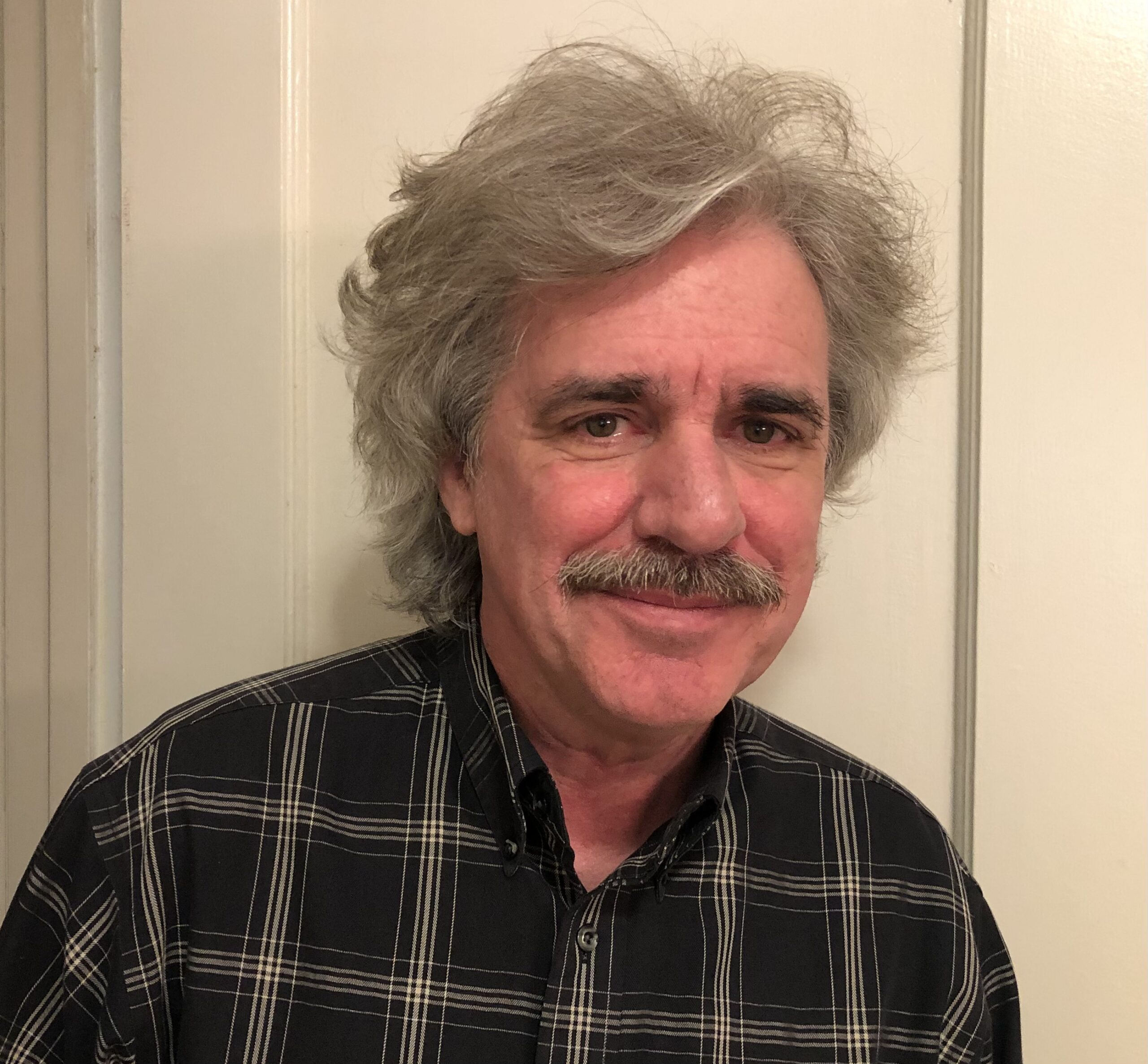
In the autumn of 2021, I began noticing threads like this from Mark Jacob, a former editor at the Chicago Tribune and the Sun-Times. It’s not uncommon for journalists to become more critical of their occupation once they retire, but Jacob’s observations cut deeper than most. (“Yes, media should be fair – to the readers, to the facts. But not to the 2-party system. To our democracy.”) So I asked if he would do an interview with me about his own “pressthink,” and how it developed an edge. He graciously agreed. Here is our exchange.

Jay Rosen: On September 27, 2021 you published on Twitter a kind of confession:

“I used to edit Page 1 stories for the Chicago Tribune, including many from Washington. In this thread, I explain why the media (including me) have been unintentionally complicit in the rise of fascism that threatens our democracy.”

I want to unpack that observation — unintentionally complicit, the rise of fascism, the threat to democracy— but first: You are a retired journalist now. When you were working in the newsroom, where did you intersect with political journalism? What experience do you have with its rules, rituals, frenzies and forms? I gather that in Chicago you edited stories about politics coming in from the Washington bureau. What else did you do that brought you into contact with the tribe of political reporters and their crafts?

Mark Jacob: I started out as a copy editor at the Pine Bluff (Ark.) Commercial, the Arkansas Democrat and the Arkansas Gazette. But in that job, as you know, you’re somewhat removed from the newsgathering process. I worked more directly with reporters and their editors (including those based in Washington) when I was at the Chicago Sun-Times 1984-1999. I started out there as a news copy editor and became Page 1 editor and then Sunday editor.

In 1999 I jumped to the Chicago Tribune as a news editor with occasional Page 1 duty. In 2002, I was promoted to nation/world news editor, which meant I was running the show at night for both the nation and world desks. I edited Washington stories almost every night, and often more than one. I dealt directly with Washington reporters and editors. This 2002-2008 period forms a large part of my experience as related in the Twitter thread from last September.
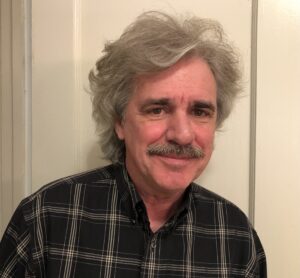
In 2008, as the Tribune’s nation and world reporting got downsized and combined with that of the Los Angeles Times, I went over to the Trib’s metro desk with a promotion to deputy metro editor. In 2015, I was named metro editor. In both jobs I worked with the Washington bureau on a variety of news stories while also separately supervising and editing the Tribune’s DC-based reporter who was tasked with covering Illinois angles on Washington stories. While I was on the metro desk (2008-2018) I also had a hand in virtually all local political stories, including the Blagojevich scandal, the Hastert molestation case, etc. Since a Chicagoan was in the White House most of that time, national and local politics often melded. For example, I was the main editor on our attempt to fact-check the birther allegations against Obama.

The Chicago Tribune has a carefully crafted reputation as a fairly conservative but mainstream newspaper that scrupulously tries to maintain balance in its coverage of Republicans and Democrats. A saying by Lincoln is engraved on a lobby wall at Tribune Tower: “Let the people know the facts and the country will be safe.” The ethic was to state the facts and arguments on both sides and then let the readers draw their own conclusions. That was a fine policy if all sides played fair and told the truth. Not so much if they didn’t. And they didn’t.

Jay Rosen: Indeed, you have said that as an editor of political stories you would count the quotes from Republicans and Democrats, “thinking an equal number would make us fairer.”

“I didn’t think I was helping either party,” you wrote. “I thought I was helping the readers. I was wrong.”

What were you wrong about — I mean what exactly, where in the chain of reasoning was the error — and what led you to that conclusion?

Mark Jacob: There were a number of errors in my process. One was in thinking of a news story as a stage that allowed Republicans and Democrats to perform their talking points, rather than as a way to inform readers about the issues and the facts as much as possible. It was also a mistake to prioritize who was speaking rather than what they were saying. There are times when a party’s leadership has coalesced around a lie. The Republican disinformation about the Jan. 6 committee, for example. If you’re obligated to run a quote by Republican leaders on that, you’re going to run a lie. And if you don’t debunk it at the same time, you’re enabling the liars.

When did I come to grips with this problem? As the Republican Party became more corrupt and at the same time more adept at laundering its message through legitimate media. You see, my equal-time approach made more sense when the two major parties were equally corrupt and dishonest. They were both pretty bad in the ‘80s and ‘90s, and there are still bad actors in the Democratic Party today. But as the Republican Party en masse has become an increasingly dangerous, anti-democratic force, equal time for the parties has become equal time for truth and for lies.

Jay Rosen: When journalists who are “out of the game” come to these conclusions it could be because they finally feel free to say what they think. Or it could be that retirement provides the necessary distance to see what was hard to see before. Or it could be the shock of recognition when you begin reading the news as a citizen, a voter, a participant in democracy, rather than a professional observer. Which of these describe your experience?

Mark Jacob: I came to these conclusions before I left. That was only four years ago. I asked for a buyout and got it. The rise of Trump made it clear that the old-fashioned mainstream journalism approach of letting Republicans and Democrats “have their say” was failing our democracy. That passive approach, which undercut the power of journalism and fact-checking, was increasingly being exploited by propagandists.

The idea that we had to be fair to Republicans-vs.-Democrats instead of being fair to the public and the facts was a great gift to professional political liars. They were able to insert fake issues into the mainstream news agenda. And they saw their falsehoods repeated by “objective” journalists, conferring a sense of legitimacy. Old-fashioned journalism has been no match for right-wing propaganda. It’s been a slaughter.

But to answer your question more directly: Obviously, I couldn’t say any of this publicly when I worked in mainstream media. That’s why old-fashioned journalism stays old-fashioned.

Jay Rosen: When you came to the conclusion that the passive approach undercut the power of journalism and was being exploited by propagandists, did you argue that the practices of the Chicago Tribune should somehow change?

Mark Jacob: I’m sure I could have been louder, but my superiors and co-workers certainly heard my concerns about whether we were confronting disinformation effectively. Our determination to be nice to lying politicians in order to appear “objective” made that job harder. For example, a superior ordered me to never say in the newspaper that Trump was lying. He told me to report what Trump said and what the facts were and let the readers come to their own conclusions. Many other legacy news outlets took this same position, and the consequences are now obvious.

In my later years at the Tribune, I was dealing with local news more than national news. And that showed me that disinformation isn’t something that only Republicans do. Mayor Rahm Emanuel, a Democrat, was an outrageous manipulator of news, rewarding his friends in the press with exclusives and punishing his perceived enemies, such as my staff, which was doing an honest, aggressive job of oversight. If you look at the Emanuel administration’s actions after the police murder of Laquan McDonald, you’ll see a textbook case of official lying. The Tribune did a strong job on that story over-all, but the video of the McDonald shooting was released because of a lawsuit by a freelance journalist, not a legacy news outlet. We were being too nice to lying local politicians in the same way that the Washington media is too nice to lying national politicians.

But don’t get me wrong: The Tribune was better than a lot of news outlets on this score. We sued the Emanuel administration for records. And we were much less likely than the Washington press to use anonymous sources. Even so, we could have been better at calling out the liars.

Jay Rosen: I want to ask you about motivations. This question arises from my experience in trying to explain press behavior to people who aren’t journalists or media critics. Thanks to the reply function on Twitter, I am now an expert in how non-journalists explain some of the things you have been describing. Here are the most common tropes they use to make sense of that “flawed approach” you have outlined, in which disinformation is rarely confronted:

Commercial pressures: News is about ratings and selling subscriptions. It’s a business, and journalists have to deliver the profits. They don’t confront disinformation because there’s no money in that, and making money for the firm is what motivates them. “It May Not Be Good for America, but It’s Damn Good for CBS.”

Hits and clicks: What journalists really care about is drawing attention to themselves. Truthtelling and confronting disinformation is less important than grabbing headlines, impressing people on Twitter, and building a personal brand. They do what’s required by the attention economy.

Ideology: Hey, they’re Republicans. Down deep they’re conservatives. Or “centrists.” Liberals. Radicals. Globalists. That’s why they do what they do. Their motivation is to advance the interests of their political sect or tribe. So they generate a narrative that accomplishes that.

Prestige: What journalists really care about is their status and visibility. Winning prizes. Working at the White House. Mixing with powerful people. Making it to the Washington Post or the New York Times one day. And above all, a TV contract.

These are not the only explanations I hear, but maybe 80 percent fall into one or more of these buckets. Why do journalists do what they do? Because of their motivations. What are their motivations? Profits, attention, political identity, prestige within the profession, fame outside it.

From your experience, what motivated your professional peers to stick with the “old-fashioned journalism” that, as you say, has been no match for right-wing propaganda? And how would you explain that behavior?

Mark Jacob: Some of these theories have validity, but the vast majority of journalists do not belong to an evil cabal. Journalism is a business, and the owners would like to keep customers of various political stripes paying them money. It’s safer and thus more profitable to avoid coming to conclusions – to produce stories that are in essence “he says this, she says this, you figure it out yourself.”

That attitude filters down to the staff. You don’t get a lot of complaints if you just write down what everyone says and leave it at that. And I was always surprised and disappointed by how sensitive some top editors were about complaints from the public and from newsmakers. They really want to avoid that, which I find ridiculous. I’ve always said that if you don’t make anyone mad in the news business, you’re doing it wrong. But not everyone seems to agree.

There’s also the access issue. I felt that my department was under pressure from above to get more scoops, but Rahm Emanuel was giving out scoops only if you played along, and my staff and I refused to. There is a career cost to holding fast to that position. Also, the vast majority of the reporters I’ve worked with just want to get the story right, but they also don’t want to get accused of bias, especially by their bosses. They want to keep their jobs. Many journalists also hold the intellectually honest view that they don’t know the truth, so they put lots of different facts and opinions in the story to get as close to the truth as possible. And that’s a legitimate position.

When I was on the Tribune foreign desk in 2003, many of us suspected that the Bush administration was lying about Iraqi weapons of mass destruction, but we couldn’t prove it either way. So we published what, in retrospect, were a bunch of government lies. The difference today is that a lot of journalists are quoting politicians they know are lying, and quoting them without debunking them.

Jay Rosen: On Twitter you have referred to “the forces of fascism” in the U.S., and “the rise of fascism that threatens our democracy,” as well as “Christo-fascism” and “Republican fascism.”

Without suggesting that the term cannot be used because it is always and everywhere over-the-top — which is a view I do not share, especially after reading Jason Stanley’s 2018 book, How Fascism Works — I want to conclude this interview by asking you: How did you come to the conclusion that fascism is the proper term for what is happening on the right wing of American politics, and what are the events that led you to that conclusion?

Mark Jacob: Let’s look at the characteristics of fascism and whether they define MAGA Republicanism. There’s a cult of personality. Check. There’s demonization of “outsiders” as a threat to the culture’s survival. Check. There’s the mindset that political opponents pose such a danger that stopping them justifies all means necessary, including lying and cheating. Check. There’s propaganda overwhelming or extinguishing journalism. Check. There’s coercion of businesses to force submission to the autocrat’s wishes. See Disney and Ron DeSantis. There’s social regimentation. See the efforts to roll back rights for women and LGBTQ people and impose Christian values in a country that’s supposed to have separation of church and state. Fascism also means there’s a drumbeat of violent rhetoric and corresponding violent actions. See January 6, 2021.

I grew up in a country where you’d occasionally hear the word “fascist” used as a joke. Now it’s an accurate term for what’s happening in our country. I invite people to read William Shirer’s Rise and Fall of the Third Reich and see how much the description of the Nazi erosion of a civilized society reminds them of what they see on America’s news every day. I’m sure a lot of people in early 1930s Germany thought the warnings about the Nazi threat were overblown. You know, the very first reference to Adolf Hitler in the New York Times assured readers that “Hitler’s anti-Semitism was not so violent or genuine as it sounded.”

Fascism is real, Jay. The only question is whether enough Americans will realize it before it’s too late.
Answers to Craig’s Questions

Craig Newmark asked me: What did the press learn from 2016? Here are my replies.

24 Mar 2022 1:21 pm 8 Comments

I have known Craig Newmark for a long time. He’s the Craig from craigslist.org. Now he’s best defined as a philanthropist.

Craig supports a lot of journalism projects, including one named for him: The Craig Newmark Graduate School of Journalism at the City University of New York (CUNY) to which he gave $20 million in 2018.

Occasionally he sends me questions about the state of journalism. I try to answer them— in a concise way, rather than going into all the details as I might with my academic colleagues.

Craig and I agreed to publish this latest exchange. It’s 800 words. His questions are in bold. 

What did the trustworthy press learn from the 2016 election?  

That its laws of gravity — predicting that Trump would crash — were not laws at all but social conventions.

Flimsier than was thought. Not great if your brand is understanding what is likely in politics.

Dan Balz, Washington Post, July 2015: “The question now is whether Candidate Trump is immune from the laws of political gravity or soon will be isolated and regarded as an object of scorn or curiosity rather than of presidential seriousness.”

A second lesson from 2016: Journalists conceded they were out of touch with large portions of the country — by which they typically meant Trump country. They said they were caught by surprise.

Dean Baquet, New York Times, looking back on the 2016 election in February of 2020: “More Americans than we understood at the time were rattled, and were looking for something dramatic… the country was a little more radically inclined than we thought.”

A third lesson. The press learned that it was vulnerable to a raging demagogue who drove audience metrics and triggered broad interest in politics.

Les Moonves, CEO of CBS, in Feb. 2016: “It may not be good for America, but it’s damn good for CBS.”

Jeff Zucker in Oct. 2016: “If we made any mistake last year, it’s that we probably did put on too many of his campaign rallies in those early months and let them run.”

But Zucker also defended that choice. “You never knew what he would say, there was an attraction to put those on air.”

Craig Newmark: What’s in practice today?

When social scientists study newsrooms they look not at personalities but routines. Poduction routines, especially.

These include routines of the mind: the way journalists imagine, explain, defend and legitimate their work, another term for which is press think.

On the whole the picture today is not vastly different from where political journalism stood in, say, spring of 2015. Still, there have been some shifts.

By shifts I do not mean shifts completed, or well handled, or consistently applied. I mean only that the category of the acceptable has been revised somewhat.

Seen this way, changes in practice since Trump began winning the presidency include:

* Describing politicized lying as lying, and false claims as straight-up false, not only in dedicated fact-check sections later on, but while you are telling the story. That’s a shift in routine.

* Recognizing in the right wing’s media ecosystem not only a source of alternative views, but a competitor in the attention economy. Producer of an alternative reality that charges up the Republican party, and competes with the picture of reality produced by mainstream journalism, replacing it for a portion of the audience.

How large a portion? A fifth, a quarter, a third? Maybe more. This is the audience for Trump’s use of the press as a hate object.

* Internet movements, conspiracy theories, and media figures that once could have been dismissed as “extreme” now have to be reported on because they could turn into powerful actors or factors.

* About Trump specifically a general recognition that he is willing to wreck the place, a premise that did not obtain in 2015-16. As ABC’s Jonathan Karl said about the prospect that Trump could run in 2024: “You’re covering somebody running in a system that is trying to undermine that very system.”

There are other realizations from the Trump era that do not arrive with good solutions or changes in practice attached.

One example: Trump’s ability to do corrupt, scandalous and democracy-damaging things right out in the open, rather than hiding them, thus undoing the power to expose shocking truths, which does not apply to the already exposed. No one quite knows what to do about that. (See my thread.)

Craig Newmark: Is it trustworthy to amplify disinformation?

Far more care has to be taken by news organizations to avoid amplifying disinformation. We are just at the beginning of extending this practice throughout what Margaret Sullivan calls the “reality based press.”

However, it’s not as simple as “don’t amplify…” because there are occasions when the public needs to know that a political figure is fasifying reality, or that a consequential lie is gaining traction, as with Stop the Steal.

So we have to go forward with both: Avoid amplifying disinformation when you can, knowing there are times when you cannot.

One need is for sound practices — like the truth sandwich — when “ignore” is not a realistic option.

Craig Newmark: What might be next?

Well, the Washington Post has a new democracy desk, which recognizes some of these threats. So did CNN’s on-again, off-again 9 pm show, “Democracy in Peril.”

These are glimmers of what might yet become a stronger defense of American democracy by mainstream journalists, but that is all they are so far: flickers of light on a dark and cresting sea.

The savvy turn in political journalism

And why I continue to criticize it.

17 Jan 2022 6:32 pm 14 Comments

For 15 years I have been writing about what I call the savvy style in the American press. This post is about the moment when a journalist goes there. Or refuses to.

But first: what is the savvy style? This is from 2011:

In the United States, most of the people who report on politics aren’t trying to advance an ideology. But I think they have an ideology, a belief system that holds their world together and tells them what to report about. It’s not left, or right, or center, really. It’s trickier than that. The name I’ve given to the ideology of our political press is savviness.

In politics, our journalists believe, it is better to be savvy than it is to be honest or correct on the facts. It’s better to be savvy than it is to be just, good, fair, decent, strictly lawful, civilized, sincere, thoughtful or humane. Savviness is what journalists admire in others. Savvy is what they themselves dearly wish to be. (And to be unsavvy is far worse than being wrong.)

Savviness is that quality of being shrewd, practical, hyper-informed, perceptive, ironic, “with it,” and unsentimental in all things political. And what is the truest mark of savviness? Winning, of course! Or knowing who the winners are.

In 1992, the Charlotte Observer, influenced by a similar project at the Wichita Eagle, decided to change the way they approached election coverage. Instead of savvy takes on the state of the race, they would try to connect the campaign, and the candidates, to what voters said they cared most about. They called this approach “the citizens agenda.” Its centerpiece was a simple question: What do you want the candidates to be talking about as they compete for votes?

By putting that question to as many people as possible — and by listening carefully to the answers — the Observer’s political team could synthesize a kind of agenda, or priority list for campaign coverage that originates with the voters, rather than operatives, candidates, donors, or editors.

The citizens agenda model called for journalists to pressure the candidates into engaging with the problems that voters said they wanted to hear more about. This sounds simple and obvious until you realize that it also means de-emphasizing controversy of the day coverage, and the latest turn in the horse race.

All that is background for a little story I want to tell you from thirty years ago.

The characters in it are Richard Oppel, then the editor of the Charlotte Observer, and Terry Sanford, then the incumbent Senator from North Carolina. (A Democrat, he ended up losing in November.) In their replies to “what do you want the candidates to be talking about as they compete for votes?” voters had brought up environmental issues a lot. The Observer wanted Sanford to respond to the voters’ concerns. Here’s how Rich Oppel recalled it:

Voters were intensely interested in the environment…. So our reporters went out to senatorial candidates and said, “here are the voters’ questions.” Terry Sanford, the incumbent senator, called me up from Washington and said, “Rich, I have these questions from your reporter and I’m not going to answer them because we are not going to talk about the environment until the general election.” This was the primary. I said, “Well, the voters want to know about the environment now, Terry.” He said, “Well, that’s not the way I have my campaign structured.” I said, “Fine, I will run the questions and leave a space under it for you to answer. If you choose not to, we will just say ‘would not respond’ or we will leave it blank.” We ended the conversation. In about ten days he sent the answers down.

For me the key moment in the story is when the sitting Senator says, “that’s not the way I have my campaign structured.” This was a signal for the savvy mindset to “click” into place. What’s the strategy there? There must be a reason Sanford doesn’t want to talk about the enviornment now. It’s the kind of thing a journalist wired into the campaign apparatus wants to know. And if you can’t know, you can speculate.

Maybe Sanford was wary of criticism from environmentalists during primary season, but confident that his record would contrast favorably with a Republican opponent. Uncovering the logic of these maneuvers is what savvy journalists do. Which is why I’ve characterized their style as, “you may not like it, but it’s smart politics.”

Rich Oppel did not go there. He rejected all that. His focus was not on the candidate’s maneuvers, but on getting answers to voters’ questions. Rather than use the Charlotte Observer’s pull to find out more about Sanford’s campaign tactics, he deployed the threat of a blank space to extract answers that would help readers cast a more informed vote. After all, what can your average voter do with “that’s not the way I have my campaign structured?”

At this point you may be wondering: why is Jay telling us this now?

One reason is that the citizens agenda model never died. A few days ago, this appeared in the Milwaukee Journal Sentinel:

We don’t change mayors very often in Milwaukee. But with Mayor Tom Barrett departing to be ambassador to Luxembourg, Milwaukee will have a new mayor after the April 5 election.

There is an opportunity for fresh thinking at City Hall — thinking that ought to be informed by city residents.

To learn what’s top of mind for voters, the Ideas Lab in collaboration with WUWM 89.7-FM, Milwaukee’s NPR, and Milwaukee PBS launched the Citizens Agenda Project.

We’re asking this question:

What do you want the candidates for mayor to be talking about as they compete for your vote?

Another reason I tell you this story from 30 years ago is that the savvy temptation still thrives in American journalism. It’s as strong as ever.

Greg Sargent, columnist for the Washington Post, points out how Republican opposition to protecting voting rights through Federal legislation has become a natural fact, part of the background of political life in Washington, rather than something journalists might probe and inquire about.

As Democrats once again debate whether to end the filibuster to pass protections for democracy, a deeply perverse dynamic has taken hold, one in which Republicans enjoy a hidden benefit from being entirely united against such protections.

Precisely because this GOP opposition is a foregone conclusion, Republicans are too rarely asked by reporters to justify it. This in turn causes that opposition to become accepted as a natural, unalterable, indelibly baked-in backstop condition of political life.

Realistically — which is a golden word in the savvy style — Senate Republicans will not consider any action that protects the right to vote or encourages more people to vote. So it’s up to the Democrats to pass such legislation, currently called the Freedom to Vote Act. That’s politics!

But realistically is not the same as justifiably. And as Sargent points out, “The bill would require states to allow no-excuse absentee voting. Despite claims otherwise, there is no evidence that mail voting advantages either party. It simply makes voting easier for everyone who chooses to take advantage of it.”

So the question for Republicans is: why not make voting easier for your voters and everyone else’s? What justifies the GOP’s opposition to no-excuse absentee voting? And do their explanations hold up under scrutiny? That’s politics too. It’s called reason-giving. Journalists ought to be pressing for those answers, but in the savvy style “realistically” is allowed to push “justifiably” out of the frame.

Which is why I continue to criticize it.